 Skip to content
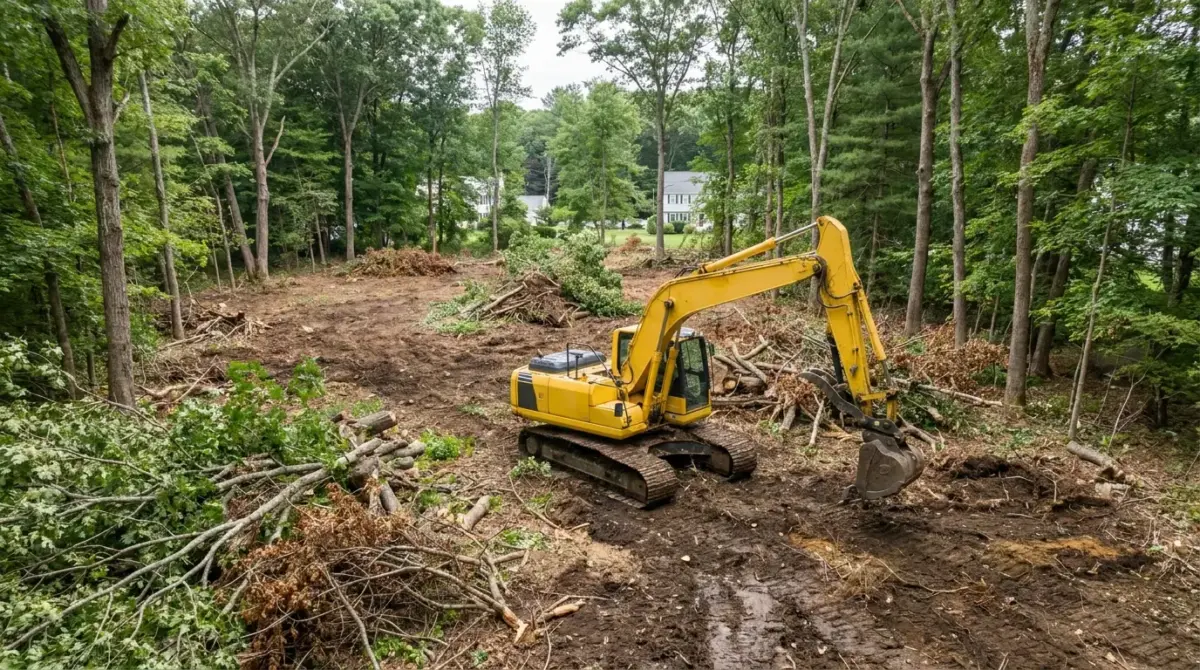
Clearing a building lot is not the same job as taking trees out of a yard. Access, stump depth, where the brush goes and where the machines can safely sit all change the work. This guide covers how clearing is planned on New England parcels, and the questions worth asking before anyone starts cutting.
You just bought a wooded lot in Bristol County or you’re planning a major addition that requires taking down trees you’ve lived with for 20 years. Either way, “lot clearing” is suddenly on your project list — and you’re learning fast that it’s more complicated, more regulated, and more expensive than just hiring someone to cut down what’s in the way.
This guide walks through what lot clearing actually involves in Massachusetts, what permits you need, what costs to expect, and how to avoid the worst mistakes that delay projects and trigger fines.
What “Lot Clearing” Actually Includes
Most contractors break lot clearing into four phases:
- Tree removal — felling and sectioning all trees within the build footprint plus required setbacks
- Stump grinding or pulling — removing the root structures so the area can be built on
- Brush and undergrowth clearing — removing shrubs, saplings, and low vegetation
- Debris management — chipping, hauling, or burning the material per local rules
Some clearing jobs also include grading, soil prep, and erosion control. Make sure your quote spells out which phases are covered and which are separate line items.
Massachusetts Wetlands Laws: The Big One
This is where most homeowners get blindsided. The Massachusetts Wetlands Protection Act (310 CMR 10.00) regulates work within 100 feet of any wetland — including small streams, vernal pools, and even seasonal drainage swales that you might not recognize as wetlands.
If any part of your lot is within that 100-foot buffer zone, you may need to file a Notice of Intent with your town’s Conservation Commission BEFORE any clearing happens. Skipping this step can mean stop-work orders, restoration requirements (planting back what you cut), and significant fines.
How to check: contact your town’s Conservation Commission early in the planning process. They can do a site visit and tell you what’s regulated and what isn’t.
Local Tree Bylaws and Permits
On top of state wetlands rules, many Massachusetts towns have local tree-protection bylaws. These can include:
- Permits required for removing trees over a certain diameter (often 8″ or 12″ DBH — diameter at breast height)
- “Heritage tree” designations protecting specific species or specimens
- Replanting requirements — for every X inches of diameter removed, you must plant Y new trees
- Total tree-canopy preservation percentages on residential lots
- Public shade tree protections (any tree in the right-of-way is automatically regulated under MGL Chapter 87)
Towns vary widely. Newton has aggressive tree bylaws. So do Brookline, Wellesley, Lexington, and Concord. Bristol County towns vary by jurisdiction. Always check with your specific town building department or tree warden.
What Clearing Costs in 2026
Lot clearing pricing depends on density of trees, access for equipment, and what you do with the debris. Realistic ranges for residential lots in eastern Massachusetts:
Bigger lots (5+ acres of clearing) sometimes drop per-acre rates because equipment mobilization gets amortized. Tiny in-fill clearing on a quarter-acre lot might pay a higher per-acre rate.
What to Save, What to Lose
Before clearing starts, walk the lot with the arborist and the builder. Decisions to make:
- Which trees are inside the build footprint and must come down
- Which trees outside the footprint will be damaged by construction and might as well come down now (root damage from equipment, soil compaction, grade changes)
- Which trees you want to preserve and how — fencing them off, building tree wells, instructing crews about no-go zones
- Specimen trees worth keeping for their value to the property
Mature trees take 30-50 years to grow back. Once they’re gone, they’re gone. Be thoughtful before the chainsaws fire up.
Tree Protection During Construction
For trees you’re keeping, protection during the build matters as much as the initial clearing decisions. Damage usually happens not from active cutting but from:
- Soil compaction from equipment driving over the root zone (extends out as wide as the canopy drip line)
- Trenching that severs major roots
- Grade changes that bury the root flare or expose roots to drying out
- Bark damage from equipment scraping the trunk
- Fuel or concrete washout spilled onto roots
Protective fencing at the drip line, signage to crews, and written specifications in the construction contract all help.
Debris Disposal Options
Massachusetts has strict open-burning rules and most towns don’t allow burning of brush from commercial clearing operations. Standard options:
- Chipping on-site — fastest, cheapest, generates a pile of mulch you can use or have hauled
- Hauling logs to a mill — sometimes you can offset cost if you have valuable hardwood
- Hauling brush to a composting facility — most common for commercial lots
- On-site burn — only with specific town permits, often only allowed January-May with strict conditions
Timing Your Clearing Project
Best months for lot clearing in Massachusetts: late fall through early spring. Reasons:
- Frozen ground minimizes soil damage from heavy equipment
- No leaves makes tree assessment and felling easier and safer
- Wildlife (especially nesting birds protected under the Migratory Bird Treaty Act) is dormant
- Crews are typically less booked than spring/summer
Schedule clearing 4-8 weeks before site work starts. This gives time for stump grinding to settle, erosion control to take hold, and any permits to wrap up.
Bottom Line
Lot clearing in Massachusetts isn’t just a tree job — it’s a permit, planning, and timing job. The actual cutting is the easy part. Getting the wetlands clearance, the tree warden sign-off, the local bylaw compliance, and the debris disposal lined up correctly is what separates a smooth start to your build from a 6-week delay. Hire a clearing contractor who handles the paperwork, not just the chainsaws.
Trusted Local Network
For homeowners outside MA dealing with similar tree-related plumbing issues, specialized drain cleaning services for root-related issues handle that scope. And for general handyman work that often accompanies tree-and-plumbing remediation, general handyman support covers the surrounding work.
Your Massachusetts Lot Clearing Specialists
Planning a new construction project? Norfolk Tree Service serves Norfolk County, Middlesex County, and Bristol County — including Waltham, Lexington, Watertown, Milton, and 40+ surrounding towns. Our lot and land clearing crews handle the permits, wetlands compliance, removal, stump grinding, and debris management as one coordinated job. Contact us today for a free site assessment.