 Skip to content
Local Tree Crews Serving Massachusetts
"*" indicates required fields
Tree Service Cost Guide
Tree work is quoted per tree and per property, which is why two jobs that look identical from the road come back with different numbers. The variables are the same everywhere in Massachusetts: how big the tree is, how hard it is to get equipment to it, what is standing underneath it, what has to happen to the wood afterwards, and whether the town has to sign anything first. This page walks through each of those in turn, so that when a quote arrives you can see what it is made of instead of guessing. (781) 386-0512. Real person on dispatch.
Size Is the First Variable
Height gets quoted, but diameter and crown spread are what actually drive the day. A tall, narrow pine can be a shorter job than a squat, wide maple, because the maple carries more wood, more weight per limb and more pieces to handle. Doubling the trunk diameter does not double the work; it roughly quadruples the volume of wood that has to be cut, lowered and moved. That is the single biggest reason a mature specimen costs several times what a young one does.
Access Decides How the Wood Comes Out
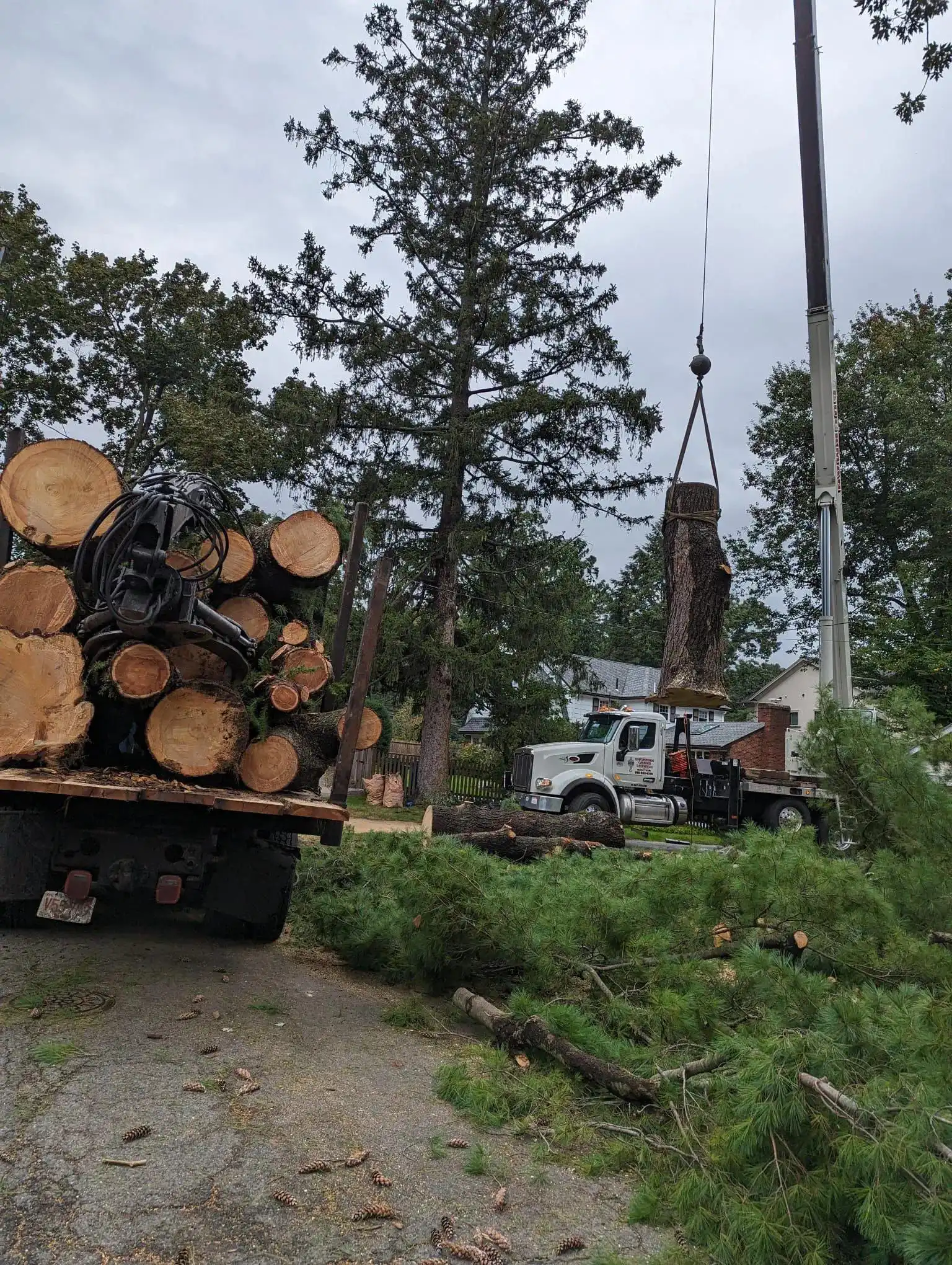
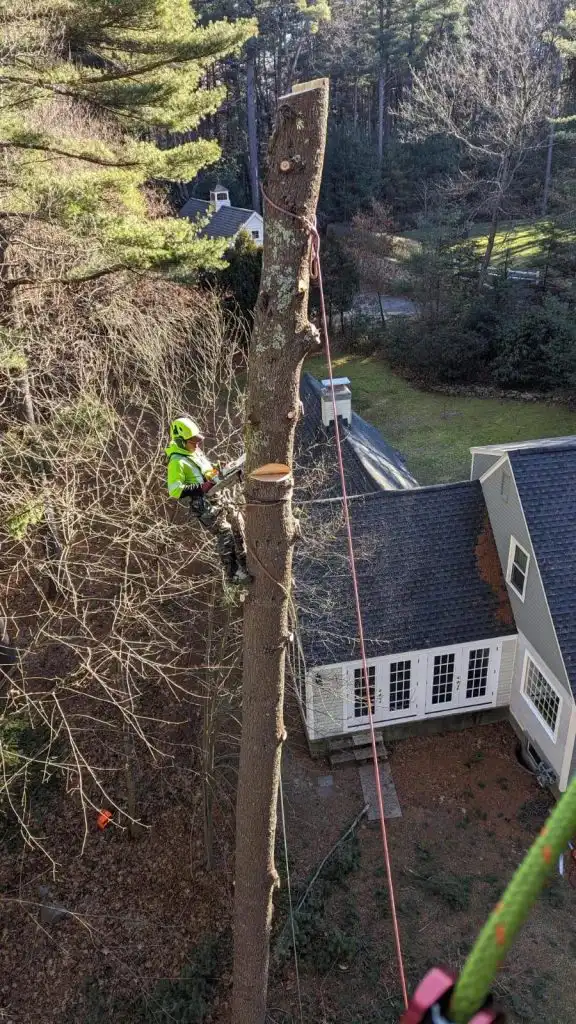
The second question is always how equipment reaches the tree and how the wood leaves. An open front yard the bucket truck can back into is the cheap case. A back garden behind a fence, over a septic field, up a slope or through a neighbor’s gate is not: the tree has to be climbed and rigged down in small controlled pieces, and every piece is then carried by hand to the chipper. The same tree in those two positions is not the same job and is not the same number.
What Is Standing Underneath It
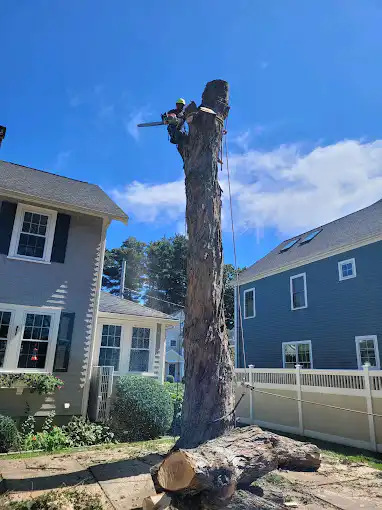
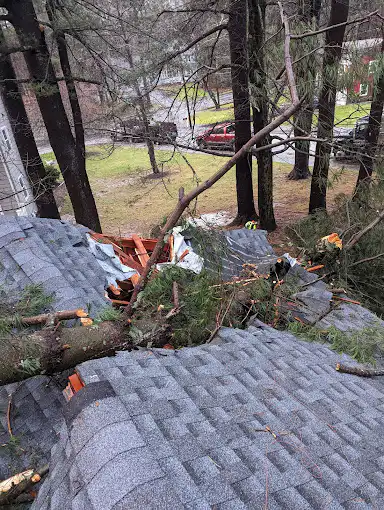
Risk is a cost. A tree over open lawn can be worked quickly. A tree over a roof, a conservatory, a pool, a fence line, a parked car or a service drop has to come down piece by piece with every piece under rope control, and the crew size goes up with it. Dead or storm-damaged wood adds to that again, because decayed timber behaves unpredictably under load and nothing can be assumed about where it will break.
What Happens to the Debris
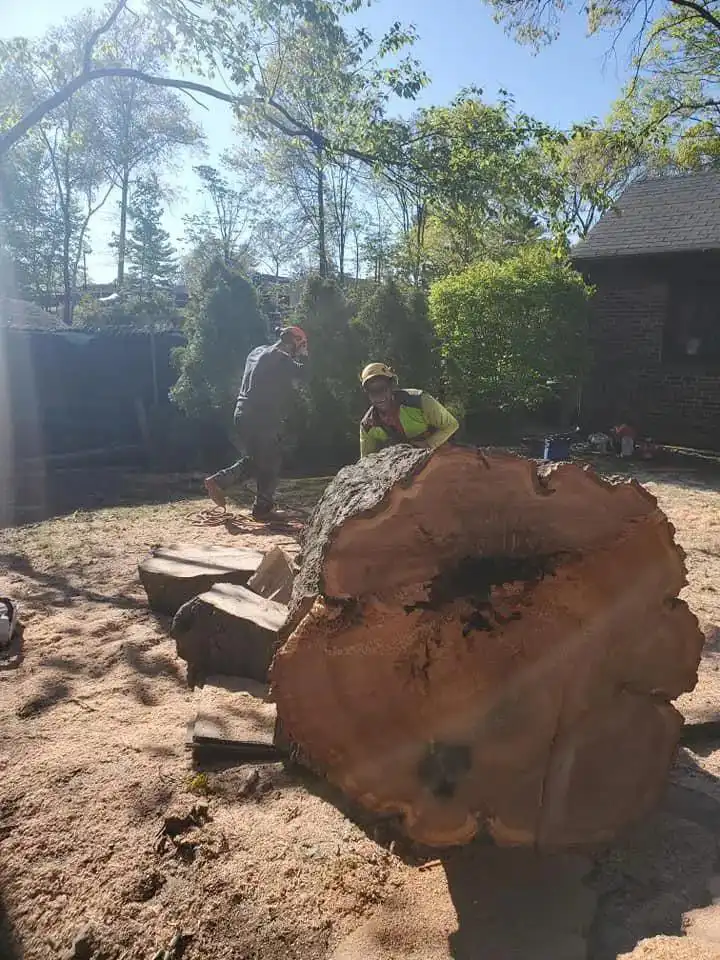
Disposal is a real line in any honest quote. Brush has to be chipped and the chips have to go somewhere. Trunk wood is heavy, and hauling it off site costs more than leaving it cut and stacked for firewood on the property. Grinding a stump is separate work again, and how deep it has to go and whether the surface roots get chased changes it. Every one of those is a choice you can make at the estimate rather than a fixed part of the price.
Need Tree Trimming? We Can Help!
Permits and the Town’s Process
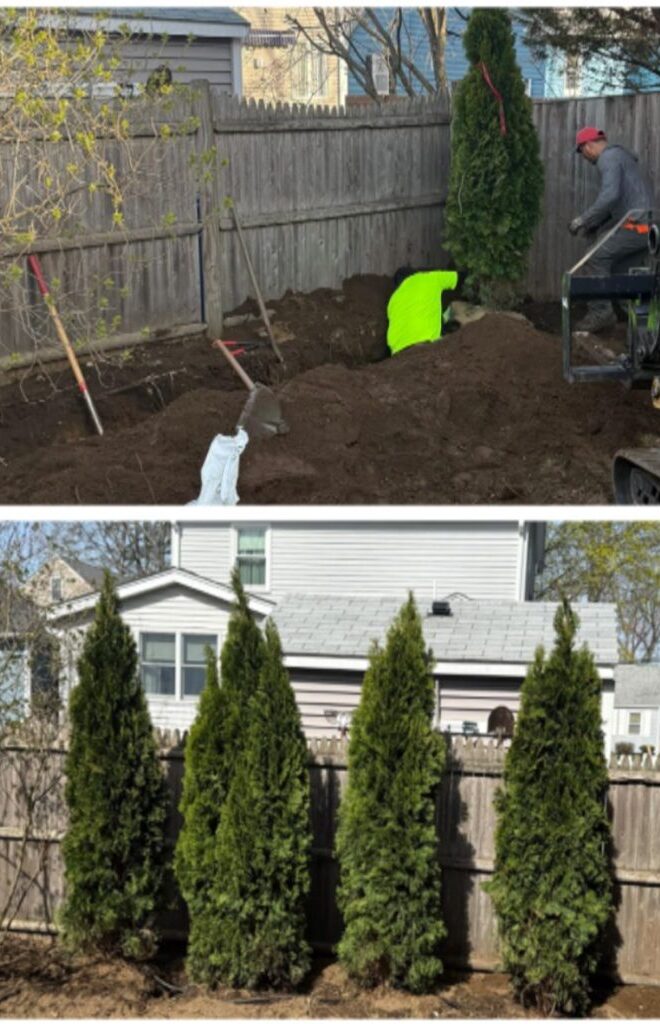
Anything in the road layout or on a public shade tree goes through that town’s tree warden, and work inside a wetland buffer goes through the conservation commission. Those filings take time rather than being expensive in themselves, but they set the schedule, and a job that has to wait on a hearing is planned differently from one that can be booked next week. The town pages on this site say which office handles what.
Season, Scheduling and Scale
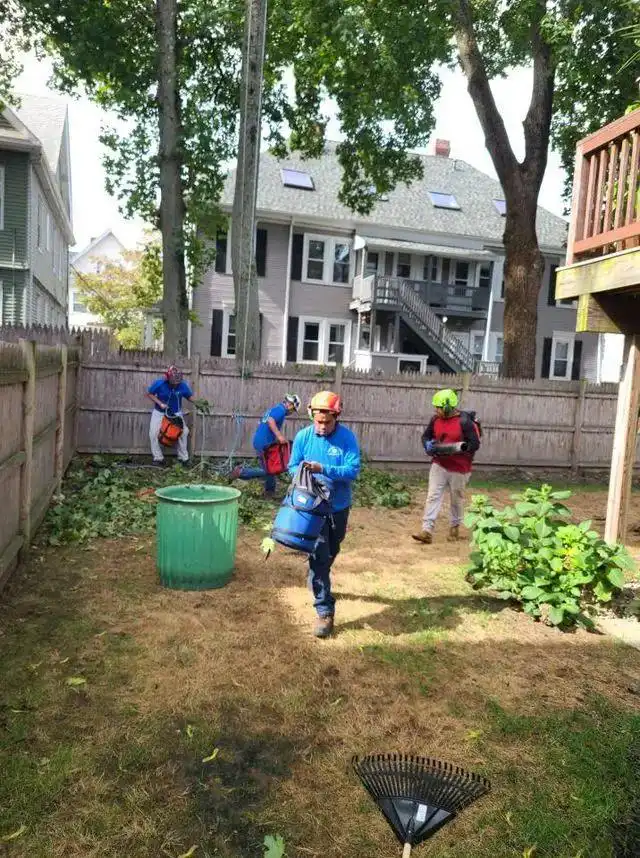
Several smaller things move the number at the margin. Several trees on one visit share the mobilization, so a lot cleared in one go is not the sum of the individual removals. Emergency work at night or in a storm is not the same product as a scheduled visit booked three weeks out. And frozen ground in winter sometimes lets a machine reach a spot that would be off limits in a wet spring.
What Keeps an Estimate Honest
Five Reasons That Hold Up- Insurance That Is Real and Current
General liability and workers’ compensation with a national underwriter. Certificates emailed before the appointment as standard practice. - The Number Comes From the Property Nobody quotes tree work accurately over the phone from a description. The walk-through is what makes the figure reliable, and it is the reason the figure does not move afterwards.
- Quotes Held to the Number
The walk-through happens on site, the price gets written down, and it does not move on the day of the work. - Cleanup Is Not an Afterthought
Chips raked, branches off the perennials, lawn ruts smoothed, magnetic sweep over the driveway. The yard goes back together the way it was.
Trees do not run on a business calendar.
How an Estimate Is Put Together
Working MassachusettsThe estimator walks the property rather than looking at the tree from the kerb. What gets recorded is the diameter at chest height, the crown spread, the condition of the union points and the trunk, what is standing within the drop zone, where the truck can sit, where the chipper can sit, how far the wood has to travel to reach it, and what you want done with the debris. Those notes are what the written number is built from.
Condition changes the method and therefore the price. A sound, living tree can be climbed and rigged conventionally. One with decay at the base, a cavity in a main stem or a crack through a union cannot be trusted to hold a climber or a rigging load, and it has to be worked from a bucket or dismantled from the top in smaller pieces. That is slower and it takes more crew, and it is the honest reason a dead tree often costs more than a healthy one of the same size.
The site itself matters as much as the tree. Soft ground after rain keeps machines off the lawn. A septic field, a leach line or a new patio means plating or hand-carrying. Overhead wires mean coordination with the utility before anything is cut. A narrow side return means every piece of wood is handled twice. None of these are surcharges invented afterwards; they are visible on the walk-through and they belong in the written estimate.
Get the estimate in writing, and get it itemised enough to see what is included: the removal itself, the brush, the trunk wood, the stump, and the clean-up. Two quotes that look far apart are often quoting different scopes — one hauling everything away, the other leaving the logs on site. Comparing them properly means comparing what is actually being done, not just the total at the bottom.
Why Two Similar Trees Quote Differently
Two maples of the same height on the same street can be a straightforward morning and a difficult full day. The first stands in an open front lawn with the truck able to back to within a few feet, sound wood throughout, and the owner keeping the logs. The second is behind the house, over a conservatory, with a crack in the main union, and everything has to be rigged down, carried through a side gate and hauled off site. Same species, same height, different jobs. That is what an on-site estimate is for.
The Cost Factors, In Order
- Size, species and condition
- Access for truck, chipper and crew
- What stands within the drop zone
- Debris: chip, stack or haul away
- Permits and scheduling
Nearby
- Framingham, MA
- Natick, MA
- Holliston, MA
- Medway, MA
- Millis, MA
- Medfield, MA
- Walpole, MA
- Foxborough, MA
How It Works
Call or Request a Quote
Tell us what you need over the phone or online.
Free On-Site Estimate
A certified pro assesses the trees and gives you a clear written quote.
We Handle It & Clean Up
Safe removal or trimming, plus full cleanup and haul-away when we leave.
Species and What They Cost To Work
Species changes the method and therefore the day: sugar maple, red maple, Norway maple, white oak, northern red oak, eastern white pine, eastern hemlock, American beech, and shagbark hickory. Oak and beech carry dense, heavy wood, so each rigged piece has to be smaller. White pine is lighter but tall and brittle. Norway maple holds included bark at its unions and has to be taken apart carefully. Dead ash and declining hemlock cannot be climbed safely at all and are bucket or crane work, which is the single biggest step change in what a removal costs.
Where These Factors Apply
Everywhere on the service-area list — the Waltham and Charles River towns, the Norfolk County towns south and west of Boston, the MetroWest ring and the Bristol County line towns. The factors on this page do not change from town to town. What changes locally is the permitting office, the street width and the overhead wires, and each town page covers those.
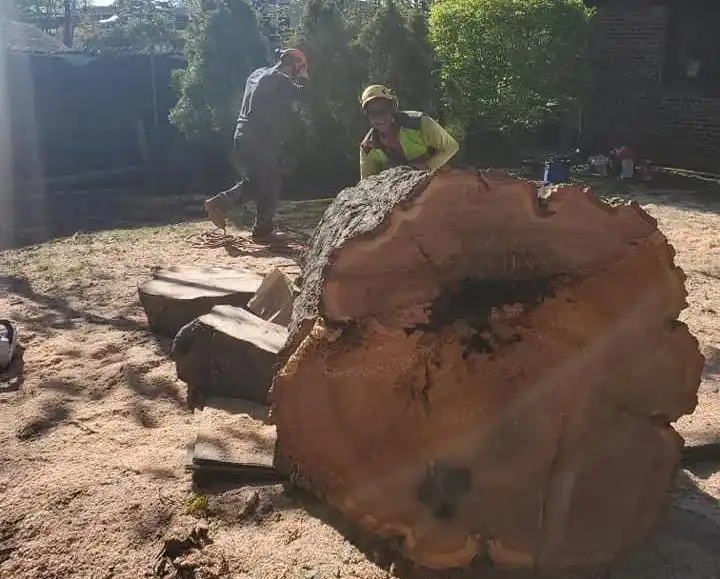 | A photo from Norfolk Tree Service job files. Every photo on this page comes from our own crews, not a stock library. |
| Estimates | written on site, after the property has been walked |
|---|---|
| Licensed & insured | Massachusetts general liability + workers’ comp |
| Phone | (781) 386-0512 |
| Services | Tree Removal Services in Massachusetts, Tree Trimming in Massachusetts, 24/7 Emergency Tree Services in Massachusetts, Tree & Shrub Planting in Massachusetts, Stump Grinding in Massachusetts, Lot & Land Clearing in Massachusetts |
| Inquiry | Send an inquiry through the quote form on this page, or call the number listed here. |
Frequently Asked Questions
Why will you not quote over the phone?
Because the things that set the price are not visible from a description. Diameter, crown spread, the condition of the unions, where the truck can sit, how far the wood has to be carried and what is standing underneath — those are what the estimate is built from, and they get recorded on the property.
Does a dead tree cost less than a living one?
Usually more, not less. Decayed wood cannot be trusted to hold a climber or a rigging load, so a dead tree that would otherwise be climbed has to be worked from a bucket or dismantled from the top in smaller pieces. That is slower and takes more crew than the same tree in sound condition.
Is the stump included in a removal?
It is quoted separately, because it is separate work with a different machine. How deep the grinding goes and whether the surface roots get chased changes it as well. You can take it, leave it, or book it for a later visit — it is a choice made at the estimate.
Can I keep the wood to save on the job?
Yes, and it does make a difference. Trunk wood is heavy and hauling it off site is a real cost. Cut to firewood length and stacked on the property, it stays out of the truck. Brush still has to be chipped either way.
Why are two quotes for the same tree so far apart?
Most often because they are quoting different scopes. One may include hauling every piece away and grinding the stump; the other may leave the logs and the stump behind. Compare what is actually being done rather than the total at the bottom, and make sure both are in writing.
Does the price change once work starts?
Not on the scope that was quoted. The walk-through is what makes the figure reliable, and it is written down before any equipment is booked. If something genuinely different is found once the crown is opened up, you are told before the work continues, not after.
A Few Things to Look For When Hiring
Tree work consistently ranks among the most dangerous occupations in the country, and the bad outcomes almost always trace back to crews stretching past their training. Look for the signals: rope-and-saddle climbing instead of spurs into living wood, controlled cuts at the branch collar, rigging used on anything that cannot safely free-fall, hardhats and chainsaw chaps on every member of the crew, sharp saws, well-maintained chippers.
Insurance is non-negotiable. General liability covers your property; workers’ compensation covers the climber. If both certificates cannot be produced before the appointment, the conversation should end there. We send them in advance.
Cleanup is what owners notice the next morning. The crews worth keeping put the property back together — chips raked or hauled per your preference, logs cut to firewood length on request, lawn ruts rolled flat, magnetic sweep over the driveway.
We are Here For You
No menus, no callback queue, no offshore call center. The dispatch line goes to a real person who can talk specifics about the project and put eyes on it this week.
Estimates, scheduling, after-hours storm dispatch — (781) 386-0512.
Quotes happen on-site. We walk the property, take a real look at every tree on the list, and put the number in writing before any equipment moves.
Single specimen or a full lot reset, residential or commercial — give us a call.
Norfolk Tree Service · 40 Fairmont Ave, Waltham, MA 02453 · (781) 386-0512 · Always Live for Emergencies · Serving Massachusetts and the surrounding South Shore region
Our Services in Massachusetts
From every neighborhood in Massachusetts, Norfolk Tree Service handles the full catalog of tree work — removals, trimming, stump grinding, planting, land clearing, and 24/7 emergency response. Browse the services below:
- Tree Removal Services in Massachusetts
- Tree Trimming in Massachusetts
- 24/7 Emergency Tree Services in Massachusetts
- Tree & Shrub Planting in Massachusetts
- Stump Grinding in Massachusetts
- Lot & Land Clearing in Massachusetts
Tree Services We Offer in Massachusetts
| Service | What It Covers | When You Need It |
|---|---|---|
| Tree Removal | Full takedowns, hazardous & dead trees, complete cleanup & haul-away | Dead, leaning, or storm-damaged trees near homes or lines |
| Tree Trimming & Pruning | Crown thinning, deadwooding, shaping, roofline & utility clearance | Overgrowth, low limbs, or to protect tree health |
| Stump Grinding & Removal | Below-grade grinding, root chasing, full chip cleanup | After a removal, trip hazards, or to replant |
| 24/7 Emergency Storm Response | Rapid response, road/roof clearing, hanging-limb removal | Fallen or hanging limbs, blocked driveways, storm damage |
| Lot & Land Clearing | Multi-tree clearing, brush & undergrowth, site prep | New builds, additions, or overgrown parcels |
| Tree & Shrub Planting | Species selection, planting, establishment care | Replacing removed trees or upgrading curb appeal |
Trusted by Massachusetts Homeowners
Read All ReviewsNearby Towns We Serve
Norfolk Tree Service provides tree removal, trimming, stump grinding, and 24/7 storm response across Massachusetts and the surrounding communities:
Contact Norfolk Tree Service
Free Massachusetts Tree Quote — Call Today
Removals, trimming, stump grinding, and 24/7 storm response across Massachusetts and the surrounding area. Licensed and insured — free written estimates.
Call (781) 386-0512Get a QuoteLicensed & Insured
Our Service Area
What Actually Drives Tree Removal Cost in Massachusetts
What a tree job costs in Massachusetts comes down to the tree standing in front of you: its height, its lean, what sits underneath it, and how much room a crew has to work. This page breaks the estimate into the parts a quote is actually built from, so you can read a number for your own property instead of guessing from a range you found somewhere else.
You called for a tree removal quote and the number that came back made you blink. Same tree. What’s going on?
Tree removal pricing in Massachusetts can swing wildly even on identical-looking trees, because the size of the tree is only one of about ten factors that actually determine the cost. Here’s a breakdown of what really drives the price, so you can read a quote intelligently and spot the difference between a fair price and someone cutting corners.
The Ballpark Range
National averages don’t translate cleanly to Massachusetts because labor and insurance costs here run higher than in much of the country. Realistic 2026 ranges for residential tree removal in eastern MA:
Those are wide ranges on purpose. A 70-foot oak in a wide-open backyard with truck access is on the low end. The same 70-foot oak hanging over a swimming pool with a fence in the way is on the high end. Sometimes way past it.
The 10 Factors That Actually Set the Price
1. Tree Height
Obvious, but worth saying: taller trees cost more because they take more time and bigger equipment. The jump from 50 feet to 80 feet often doubles the price because at 80+ feet a bucket truck might not reach the top — you’re climbing or using a crane.
2. Trunk Diameter
A skinny pine and a thick oak can both be 60 feet tall but the oak might cost double. More wood means more chainsaw time, more cuts, more sections, and more weight to haul.
3. Species
Oak, hickory, and maple are dense hardwoods — slower to cut, harder on chains. Pine, poplar, and ash are softer. A 50-foot oak takes longer than a 50-foot pine, and the quote reflects it.
4. Access
The single biggest hidden cost driver. Can the truck and bucket get to the tree? Or does the crew need to carry every section through a narrow gate, around the house, and down a slope? Access difficulty can easily double a quote because everything takes 3-5x longer when hand-carried.
A backyard tree on a tight urban lot in Watertown will quote higher than the same tree on a wide-open suburban property in Sudbury, every time.
5. Proximity to Structures
A tree that can be “felled” — cut and dropped in one piece into a clear area — is the cheapest job there is. A tree that needs to be “sectioned” — climbed, cut piece by piece, each section roped down to protect what’s below — costs 2-3x more and takes a full day instead of a few hours.
Trees near houses, fences, sheds, decks, pools, driveways, and especially power lines all require sectioning. There’s no shortcut.
6. Power Lines
Trees touching or near energized power lines require coordination with the utility. Sometimes the utility comes out first to de-energize or protect the line. That adds time and cost. Tree services that aren’t qualified for line clearance work shouldn’t even quote those trees — and a good crew will tell you when they need the utility involved before they swing a saw.
7. Tree Condition
Counterintuitively, a dead or dying tree is often MORE expensive to remove than a healthy one. Why? A climber can’t trust the wood — branches that look solid might snap under their weight. Dead trees with rot at the base might fall in unpredictable directions. The crew has to be extra cautious, which means slower, which means more billable hours.
8. Stump Grinding (Add-On)
Most “tree removal” quotes don’t include stump grinding by default. If you want the stump gone, ask specifically.
9. Debris Hauling
Cheaper quotes sometimes leave the wood and brush on your property. That sounds fine until you realize you now own 800 pounds of oak rounds that need splitting, drying, and storing — or hauling to a dump that charges you to drop it off. Make sure your quote spells out what happens to the wood.
10. Permits
In Massachusetts, public shade trees (anywhere in the right-of-way between the sidewalk and street) require a tree warden’s permit under MGL Chapter 87. Conservation areas and wetlands have additional restrictions. A good service handles the paperwork as part of the quote. A bad one skips it, leaving you on the hook for the fines. See our full guide to Massachusetts tree removal permits for a town-by-town breakdown.
Red Flags in a Quote
If you’re comparing quotes, watch out for these:
- Bid that’s 40%+ below the others. Almost always means: not insured, not licensed, debris stays on your property, or all three.
- No mention of insurance or licensing. A legitimate Massachusetts tree service is licensed and carries general liability plus workers’ comp. If they can’t show proof, walk away. One injury on your property without their insurance = your homeowner’s policy gets billed.
- Cash-only or “we can save you the tax.” Means no real business, no recourse if something goes wrong.
- Door-to-door solicitation after a storm. Storm chasers from out of state are notorious for taking deposits and disappearing.
- No on-site assessment. Real arborists need to see the tree, the access, and what’s around it before quoting accurately.
When Insurance Pays
Tree removal triggered by storm damage is sometimes covered by homeowner’s insurance, but with limits. Preventive removal of a hazardous tree before it falls? Rarely covered. Removal of a tree that fell in your yard but didn’t hit anything? Sometimes covered, sometimes not.
Read your policy before assuming. And document everything with photos before the removal starts.
Bottom Line
A tree removal quote isn’t really about the tree. It’s about everything around the tree. Two arborists looking at the same oak can quote very different prices and both be honest — they’re seeing different challenges in the access, the proximity, the species, the condition. The lowest number isn’t always the best deal. The highest isn’t always price-gouging. Get 2-3 quotes, ask each what’s included and what isn’t, and pick the one that’s licensed, insured, and walked the property before quoting.
Trusted Local Network
Adjacent trades often come up during major tree work. For homeowners outside MA needing handyman support, general handyman services for tree-adjacent home repair handle that scope. And for restoration after tree-related property damage, structural restoration services cover the recovery side.
Your Massachusetts Tree Removal Specialists
If you need a transparent, fully itemized quote on a tree removal across Norfolk County, Middlesex County, and Bristol County — including Waltham, Lexington, Watertown, Milton, and 40+ surrounding towns, Norfolk Tree Service offers free on-site assessments before any work or commitment. Our fully licensed and insured crews handle tree removal with all required tree warden permits included. Contact us today for a no-obligation estimate.
Tree Removal Cost in Norfolk County: When to Remove a Tree
If you own a home in Waltham, Holbrook or anywhere across Norfolk County, sooner or later you’ll face a tree question: is that leaning oak a hazard, and what does removal actually cost? Here’s a straight answer from a local, licensed crew.
When a tree needs to come down
Remove a tree when you see a split trunk or major cavity, large dead limbs over a roof or driveway, root heave (soil lifting on one side), or fungal conks at the base. New England’s freeze-thaw cycles and nor’easters turn a weak tree into a hazard fast. If it threatens a structure, that’s same-day work, not spring work.
What tree removal costs in Norfolk County
Price tracks height, trunk diameter, lean, and access. A modest 30-foot tree in an open yard is straightforward; a mature oak overhanging a neighbor’s roof needs rigging and a crane, and costs accordingly. Stump grinding is usually quoted separately. Always get the estimate in writing, and confirm the crew is licensed and insured — if an uninsured cutter drops a limb through your roof, that’s your claim, not theirs.
Storm damage: what to do first
Stay clear of any limb touching a utility line and call the power company before anyone climbs. Photograph the damage for your insurer, then get the hazard stabilized. We run 24/7 emergency response for exactly this.
Serving Waltham, Holbrook & Norfolk County
Norfolk Tree Service handles removal, trimming, stump grinding and storm cleanup in Waltham, Holbrook and across the county. Free estimate: (781) 386-0512.