 Skip to content
Once the tree is down you still have the stump, and the two ways of dealing with it are not interchangeable. One leaves the root plate in the ground; the other takes it out and leaves a hole to fill. This guide explains what each method does to the ground, what the spot looks like afterwards, and which one suits what you plan to put there.
The tree is down. The trunk is gone. You’re staring at a 24-inch stump in the middle of the lawn that wasn’t on your shopping list when you booked the removal. Now what?
You’ll see two terms tossed around — stump grinding and stump removal. They sound like the same thing. They’re not. The difference shapes both the price and what you can do with that spot afterward.
Stump Grinding: What It Actually Does
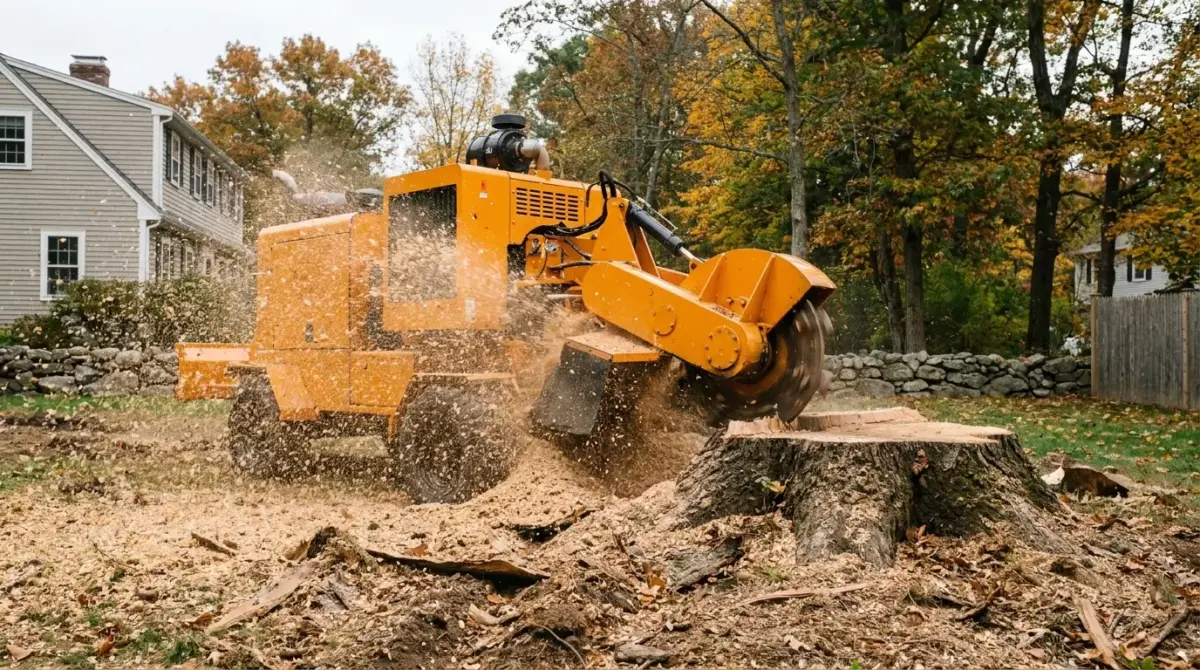
A stump grinder is a heavy power tool with a spinning cutting wheel that chews the stump down below ground level — usually 4 to 12 inches deep. The grinder turns wood into mulch on the spot, you backfill with topsoil, and within a few weeks grass grows back over it.
What it doesn’t do: pull up the root system. The roots stay in the ground and decompose naturally over 5 to 10 years.
Faster and cheaper than full removal.
Stump Removal: The Full Excavation
Full stump removal means pulling the entire stump and root ball out of the ground. Usually requires an excavator or backhoe. The hole left behind is significant — often 4-6 feet across and a few feet deep — and gets backfilled with soil afterward.
The job is messy, disruptive to the surrounding lawn, and slower.
For most homeowners, grinding is the better answer. Full removal is necessary in a few specific situations.
When to Grind
- You just want to mow over the spot in a few weeks
- You’re planting grass or low groundcover
- The stump is a tripping hazard or eyesore but isn’t in the way of construction
- You’re on a budget
- You want a fast job (most grinding takes 1-2 hours)
When to Pull the Whole Thing
- You’re planting a new tree in the exact same spot (decomposing roots compete with new roots and harbor disease)
- You’re pouring a foundation, patio, or driveway over the area
- The stump is over 36 inches and the root mass is too big to leave
- The tree was killed by a soil-borne disease that could spread
- Major root system damage to nearby utilities or hardscape
For most landscaping plans, full removal isn’t worth the extra cost.
What About Chemical Stump Killers?
The hardware store sells “stump remover” products — usually potassium nitrate. These slowly accelerate the natural decay process of an already-cut stump. Realistic timeline: 6 months to 3 years.
Most homeowners try this once and give up. The stump is still there. The lawn around it is still ugly. And you’ve now got chemicals leaching into your soil. Skip it — grinding is faster, cleaner, and actually finishes the job.
What About the Sucker Shoots?
Some species — willow, poplar, locust, maple, sumac — will send up new “sucker” shoots from the root system after the trunk is cut, even after grinding. The roots are trying to grow a new tree.
The UMass Extension stump removal guidance notes that suckers from species like Norway maple can persist for years after stump grinding. The fix: cut suckers as they appear, paint the cuts with stump killer if they keep coming back, or do full removal of the root system.
Grinding Depth Matters
Not every “stump grinding” job grinds to the same depth. Cheap quotes sometimes mean a quick surface grind — just below the lawn line, maybe 2 inches deep. That looks fine for a few months. Then the stump weathers, sinks, and the high spot reappears.
Quality grinding goes 8 to 12 inches below grade. If you plan to plant grass and never see that spot again, this is what you want. Ask before booking. Most reputable services include this depth as standard but lowball quotes sometimes skip it.
What Happens to the Wood Chips?
Grinding produces a small pile of wood chips and shredded root material. Three options for what happens next:
- Backfill the hole — cheapest, but you’ll need to add topsoil too if you want grass to grow
- Spread as mulch elsewhere — free mulch for your beds
Confirm which option your quote includes. Some services leave the pile, some haul, some spread.
Underground Utilities: Always Call First
Before any stump grinding, a reputable service confirms with Dig Safe Massachusetts that no buried utilities run underneath. Grinders cut several inches deep — well into the range where gas, electric, water, and cable lines often run. Hitting one is dangerous, expensive, and legally on the contractor (if they’re licensed) or you (if you DIY without calling 811).
Can I DIY This?
Rental stump grinders exist at most equipment yards. Doable on a small stump if you’re handy and patient. But:
- Walking a grinder is harder than it looks
- Flying debris is a real injury risk — proper PPE required
- You still need to call Dig Safe
- Day rate + your time often costs more than just hiring a pro for a single stump
For a single stump in your yard, hire it out. For five-plus stumps and you want the work spread over a weekend, renting starts to make sense.
Bottom Line
Stump grinding is the right answer for almost every Massachusetts homeowner. It’s faster, cheaper, and leaves the area mowable in weeks. Full removal is the exception — reserved for replanting a new tree in the same spot, building over it, or dealing with diseased root systems. If a contractor pushes full removal as the default, ask why.
Trusted Local Network
Storm-related and seasonal tree work often surfaces broader property concerns. For homeowners outside MA dealing with seasonal home prep, HVAC services for cold-weather and storm prep handle the heating-system side. And for restoration after major storm events, storm-damage restoration services cover the cleanup scope.
Your Massachusetts Stump Grinding Specialists
If you’ve got a stump (or five) that needs to disappear, Norfolk Tree Service serves Norfolk County, Middlesex County, and Bristol County — including Waltham, Lexington, Watertown, Milton, and 40+ surrounding towns. Our stump grinding crews come fully insured, call Dig Safe before any work, and grind to a full 8-12 inches below grade. Contact us today for a free estimate.