 Skip to content
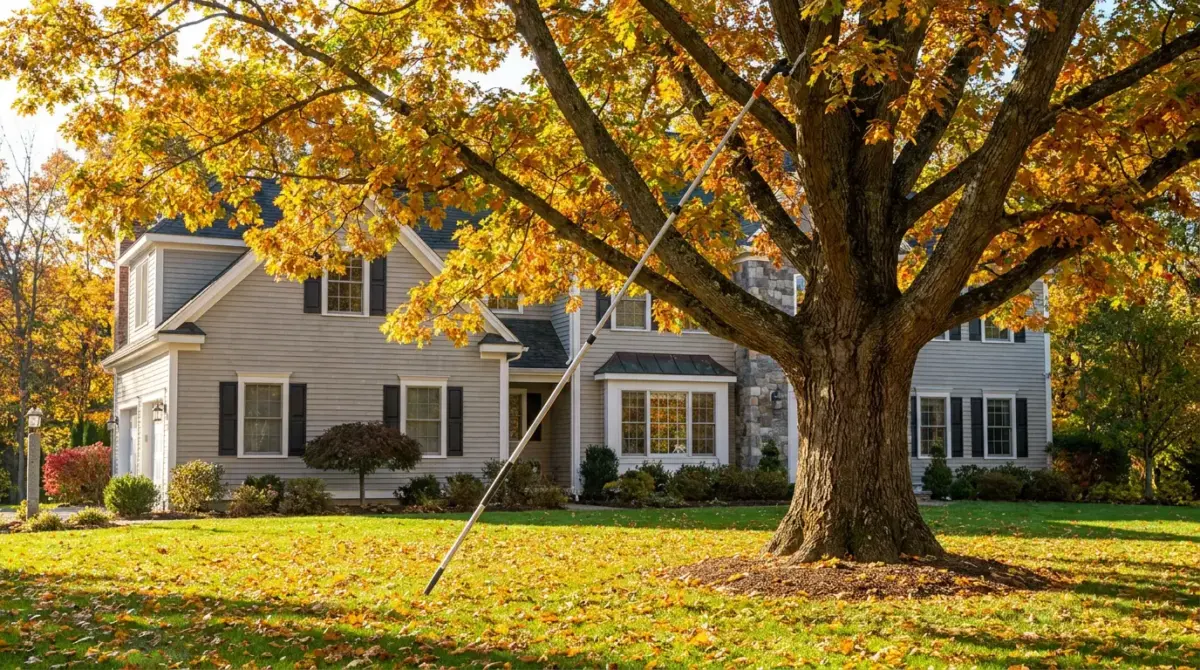
Pruning is as much about timing as technique. A cut that helps an oak in February invites trouble in June, and species disagree about when they want to be touched. This guide works through the New England year month by month, so you know what can come off now and what is better left until the season turns.
Ask five neighbors when to prune the maple in your front yard and you’ll get five different answers. Spring. Fall. Late winter. “Whenever it looks bad.” Most of those answers are partly right and partly wrong, and the wrong part is the kind that bleeds sap for weeks or invites a fungus that kills the tree.
Here’s the straight answer for Massachusetts homeowners, organized by month. Bookmark this and your trees will thank you.
The Golden Rule: Dormant Season Is Best
For most species — oak, maple, beech, ash, fruit trees — the best time to prune is late winter while the tree is still dormant. Late January through early March in our climate. The tree isn’t actively pushing sap, so cuts heal cleanly. Insects that spread disease aren’t active. And without leaves, an arborist can actually see the structure of the canopy and make informed cuts.
The UMass Extension guide on pruning shade trees backs this up — dormant pruning produces the best healing response and the lowest disease risk.
January and February: Prime Time
This is the window real arborists fight for. Cold weather, dormant trees, leafless visibility, and frozen ground that minimizes lawn damage from equipment. If you have a major pruning job to do — structural correction, big limb removal, canopy thinning — schedule it now.
One caveat for Massachusetts: avoid pruning oaks between April 1 and October 1 because of oak wilt. More on that below.
March: Last Call for Sap-Bleeders
Once the sap starts running — late February into March depending on the year — maples, birches, walnuts, and elms will bleed copiously from any cut. The bleeding looks alarming but it doesn’t actually kill the tree. It does waste energy, attract insects, and stain whatever’s underneath.
If you didn’t get to your maple in January or February, your two options are: prune it now and accept the mess, or wait until midsummer when the sap stops flowing.
April and May: Hands Off Oaks
Spring is when oak wilt — a fungal disease that can kill an oak in a single season — spreads through Massachusetts. The pathogen is carried by sap-feeding beetles attracted to fresh pruning wounds. Cut an oak in May, you’re basically ringing the dinner bell.
The US Forest Service oak wilt guidance and most Massachusetts arborists draw the line at April 1 through October 1. No oak pruning during that window unless it’s an emergency. If a storm cracks a major oak limb in June and you have to act, the wound should be sealed immediately with pruning sealer — the one situation where sealer actually helps.
For non-oaks, spring pruning is generally fine, especially light touch-up cuts and removal of dead or broken winter wood.
June and July: Light Touch Only
Summer is for shaping, not surgery. Light pruning during early summer can correct the direction of growth on young trees and remove sucker shoots from the base. Big structural cuts during peak growing season stress the tree because it’s already spending energy on leaves and fruit.
One summer benefit: this is when you can spot dead or diseased branches that didn’t leaf out. Mark them now and prune them out in winter (or sooner if they’re hazardous).
August: Avoid If Possible
Late summer pruning can trigger a flush of new growth that won’t have time to harden off before frost. That tender new growth then dies back over winter and can let in fungal infection. Skip August unless you’re removing obvious hazards.
September: Storm Prep Window
Now we’re heading into nor’easter season. September is your chance to remove dead branches, overextended limbs, and anything that could fail under wind, ice, or heavy wet snow. This isn’t deep pruning — it’s targeted hazard reduction.
Pay particular attention to trees near the house, the driveway, power lines, and the kids’ play area. Anything dead, hollow, or hanging at an awkward angle gets removed before the first big storm.
October: Cleanup, Not Cutting
October in Massachusetts is for raking leaves, mulching beds, and looking up at the canopy with fresh eyes now that the leaves are dropping. Make a list of what you want done in January and February. Don’t make heavy cuts now — the tree is shutting down for winter and won’t have a chance to close wounds before freezing temperatures arrive.
November and December: Wait for Dormancy
Trees are dropping leaves and entering dormancy but aren’t quite fully there yet. Wait until consistent freezing temperatures arrive — usually mid-to-late December — before any major pruning. Emergency hazard removal is always fair game, any month.
Special Cases by Species
A few species have their own quirks worth knowing:
- Flowering trees (dogwood, magnolia, crabapple): prune just after they bloom in spring, not before — or you’ll cut off next year’s flower buds
- Fruit trees (apple, pear, peach): late winter is best for shaping and yield
- Evergreens (pine, spruce, hemlock): light shaping in early summer, never the bare branches that won’t regenerate needles
- Birch, maple, walnut: dormant pruning only, or wait until midsummer to avoid the bleeding
- Hydrangeas (often confused with tree work): depends on the variety — research your specific type before cutting
When You Can Prune Any Month
Three situations override the calendar:
- Dead, broken, or actively hazardous branches — remove them immediately, any month
- Branches in contact with the roof, gutters, or siding — same, before they cause damage
- Branches making contact with power lines — call the utility, not a tree service
Why Permits Matter in MA
One thing many Massachusetts homeowners don’t realize: any tree in the public right-of-way (typically the strip between the sidewalk and the street, plus the area near utility lines) is considered a “public shade tree” under MGL Chapter 87. Touching it requires a permit from your town’s tree warden. Skipping that step can result in fines, plus the town can require you to plant a replacement.
A licensed local tree service handles this paperwork as part of the job. DIY pruning of those trees, however well-intentioned, is illegal.
Bottom Line
Late January through early March is when serious pruning gets done in Massachusetts. September is for pre-storm hazard reduction. Skip oaks from April to October. Match your maple work to dormancy or accept the bleeding. And when you’re standing under a 60-foot oak with chainsaw in hand wondering if you’ve got this — you probably don’t. That’s not a knock on you. It’s just physics, ladders, and falling wood.
Trusted Local Network
Tree work that surfaces water and root issues often connects to broader plumbing concerns. For homeowners outside MA dealing with the underground side, plumbing services for sewer and drain root-intrusion handle that scope. And for general handyman support during landscape and tree work, general handyman services cover the surrounding work.
Your Massachusetts Tree Pruning Specialists
If you need expert pruning done at the right time for your tree species, Norfolk Tree Service serves Norfolk County, Middlesex County, and Bristol County — including Waltham, Lexington, Watertown, Milton, and 40+ surrounding towns. Our ISA-trained crews handle tree trimming on the right schedule for your specific species and pull every required tree warden permit for public shade trees. Contact us today for a free on-site consultation.