 Skip to content
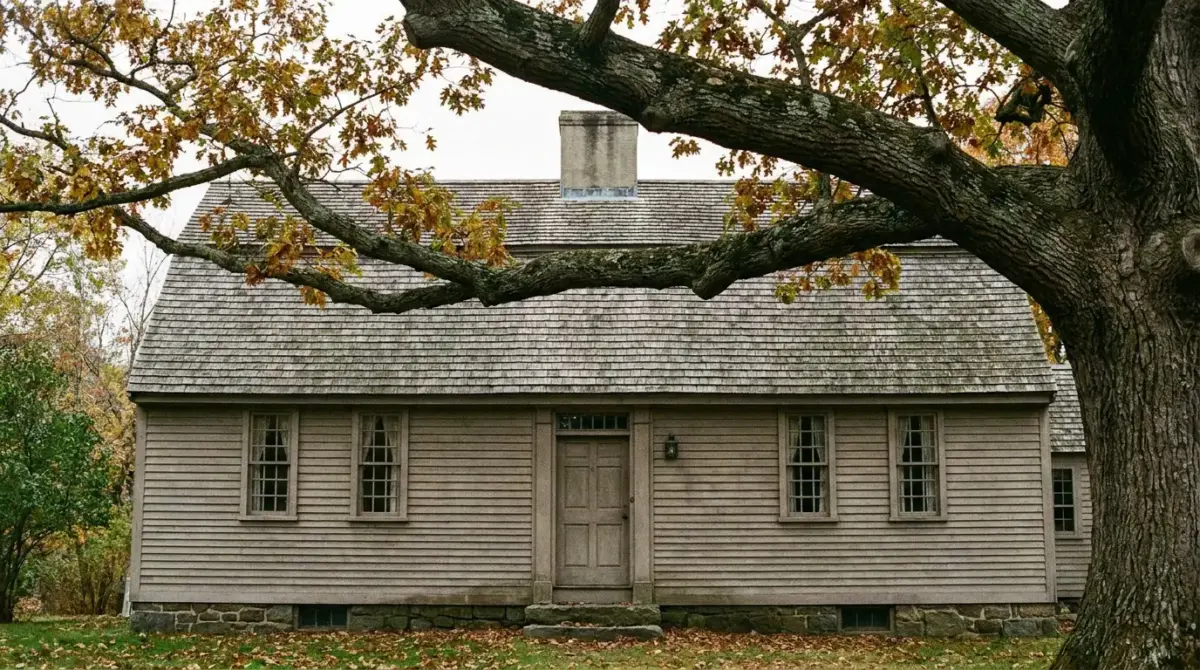
Branch on roof is one of the most common tree-care questions Massachusetts homeowners ask. This guide walks you through what every property owner should know about branch on roof — what to watch for, when to act, and how a Massachusetts arborist approaches branch on roof on real properties across Norfolk, Middlesex, and Bristol counties.
The branch isn’t huge. It’s just brushing against the gutter. Or barely scraping the shingles when the wind blows. Or hanging out over the roof but not actually touching anything yet.
If you’ve been telling yourself it’s fine, you’re wrong. Branches in contact with the roof – or even close to it – cause damage homeowners don’t notice until repair time. Here’s what’s actually happening and why this is one of the easiest preventive pruning calls to make.
What a Branch Touching Your Roof Does
1. Shingle Wear
Every breeze moves the branch back and forth across the shingles. Each pass removes a tiny bit of the protective granular coating. Over a couple of years, a section of shingle becomes smooth and bare – which means it fails at one third the lifespan of the rest of your roof.
2. Moisture Trap
Branches over the roof drop leaves and debris that collect in valleys, gutters, and behind chimneys. The debris holds moisture against the roof and dramatically accelerates shingle decay.
3. Algae and Moss
Shaded sections of roof stay damp longer. Algae and moss colonize the shaded areas. Moss in particular lifts shingle edges and forces water underneath them. Trees overhanging the roof are the #1 cause of moss growth.
4. Squirrel and Pest Highway
Branches touching the roof are an interstate for squirrels, raccoons, and rodents. They land on the roof, find vulnerable spots, and chew their way into your attic. Most attic pest problems start with overhanging branches.
5. Storm Damage Risk
A small branch making light contact today is a heavy branch making serious contact in a nor’easter. The same wind that loads a branch with extra force will whip it down across your roof at 40+ MPH gusts.
How Far Branches Should Be From the Roof
Minimum clearance recommended by most roofing contractors and arborists: 6 feet between any branch and the roof surface. This accounts for branch movement in wind, future growth, and minor branch sag over time.
For larger trees, push the clearance to 10 feet. A 60-foot oak branch will deflect several feet in a strong gust.
When to Prune vs Remove the Tree
For most situations, targeted pruning is the answer. An arborist removes just the branches encroaching on the roof, preserves the rest of the tree, and reshapes the canopy to grow away from the structure rather than over it.
Removal becomes the right call when:
- The trunk itself is too close to the house (within 10-15 feet of the foundation for large species)
- Pruning would require removing more than 25% of the canopy
- The tree is also showing other warning signs – decay, lean, dieback
- The tree is a high-failure species (silver maple, Bradford pear) that’s likely to fail in storms regardless
The ISA hazard tree guidelines include proximity to structures as a major factor in removal recommendations.
DIY or Pro?
Branches touching the roof are almost always above the safe DIY pruning line. Going up a ladder with a chainsaw to cut a branch that could fall back toward you is one of the most dangerous yard tasks a homeowner can attempt. Pro work, every time.
Cost
Targeted pruning of branches over a roof typically runs $300-$800 depending on tree size and access. Roof replacement after years of branch damage: $10,000-$25,000. Easy math.
Bottom Line
That branch touching your roof is not fine. Every month it stays there is shingles wearing down, debris collecting, algae growing, and pests getting closer to your attic. A few hundred dollars for proper pruning saves thousands in roof repairs and prevents the storm damage scenarios that lead to bigger problems.
Trusted Local Network
A branch on the roof is one of those issues that often cascades into restoration and structural concerns. For related needs, we recommend structural and water-damage restoration services.
Your Massachusetts Tree Trimming Specialists
Branches touching or hanging over your roof? Norfolk Tree Service serves Norfolk County, Middlesex County, and Bristol County including Waltham, Lexington, Watertown, Milton, and 40+ surrounding towns. Our ISA-certified arborists handle tree trimming to safely clear roofs and reshape canopies away from structures. Contact us today.