 Skip to content
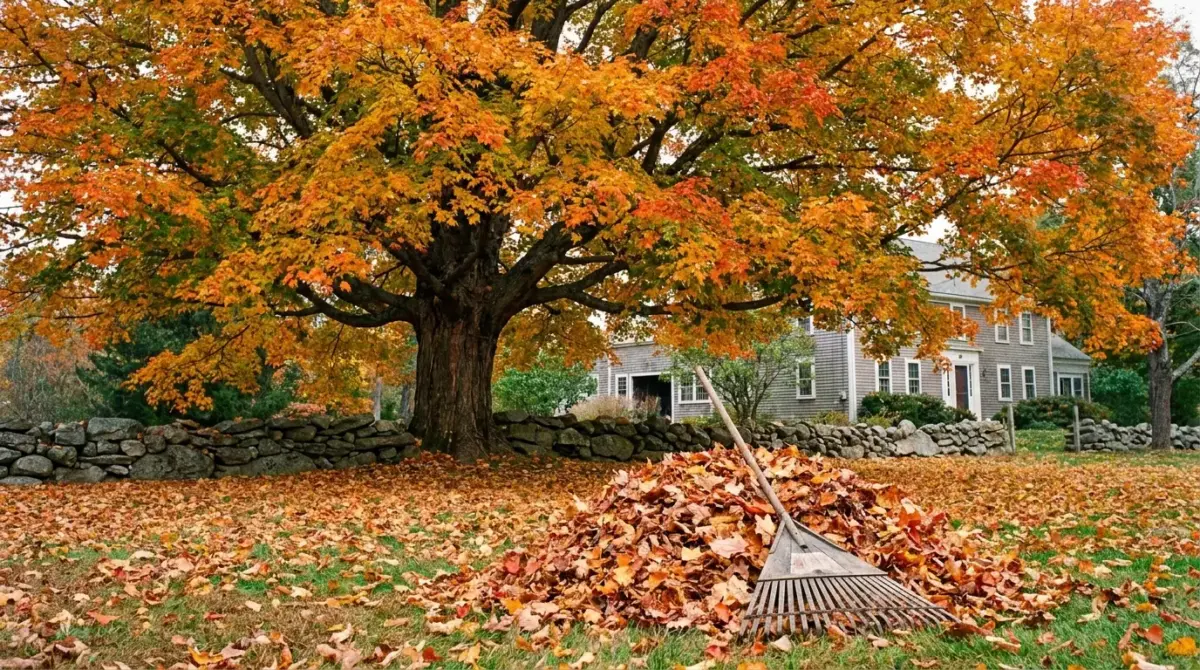
Fall tree care is one of the most common tree-care questions Massachusetts homeowners ask. This guide walks you through what every property owner should know about fall tree care — what to watch for, when to act, and how a Massachusetts arborist approaches fall tree care on real properties across Norfolk, Middlesex, and Bristol counties.
Fall in Massachusetts is the busiest time for trees behind the scenes. While the visible action is the foliage show, the real work is happening underground – roots establishing for winter, the tree consolidating energy reserves, and storing the carbohydrates needed to survive months of dormancy.
What you do (and don’t do) in October directly affects how your trees come into next spring. Here’s the fall checklist.
1. Rake or Mow Leaves – But Not Where the Tree Lives
Leaves left in thick layers on lawn smother the grass. But leaves left in tree beds and along property edges break down naturally and feed the trees that dropped them. The compromise: rake leaves off the lawn, but leave them under the tree’s drip line where they belong.
Even better: mulch-mow the leaves directly into your lawn with a mulching mower. The shredded leaves break down quickly and provide free nitrogen.
2. Deep-Water Before the Ground Freezes
Trees need adequate soil moisture going into winter. If September and October were dry, give every mature tree a deep watering before the ground freezes – typically late October to mid-November in Massachusetts. About 10 gallons per inch of trunk diameter, applied slowly at the drip line.
3. Refresh Mulch (Properly)
Top off mulch beds around trees to 2-4 inches deep total. Pull it back from the trunk – donut shape, not volcano. Mulch insulates roots through winter freeze-thaw cycles and reduces stress.
4. Wrap Young Trees Against Rodents
Voles and mice chew bark off young trees during winter when other food is scarce. Wrap the trunks of trees under about 5 years old with hardware cloth or commercial tree guards before snow falls. Remove the wraps each spring.
5. Remove Hazardous Branches Before Storms
Dead branches, branches over the house, and clearly hazardous limbs should come down before the first nor’easter. A 2-hour removal in October is much cheaper than emergency cleanup after the branch fails in a storm.
6. Plant New Trees
Mid-September to mid-October is the best window in Massachusetts for new tree planting. Cooler temperatures, reliable rain, and the tree has months to establish roots before next summer’s heat. The Arbor Day Foundation planting guide walks through proper depth and technique.
7. DON’T Prune Most Trees in October
Fall pruning triggers a flush of new growth that won’t have time to harden off before frost. The tender new growth dies back over winter, creating entry points for disease. Save major pruning for January-March dormancy.
Exception: dead, broken, or actively hazardous limbs can be removed any time.
8. Inspect for Pests and Diseases
Late summer/early fall is when many tree pests reveal themselves. Walk your trees: look for spotted lanternfly egg masses (gray putty-like patches), hemlock woolly adelgid (white woolly masses on hemlock needles), and signs of emerald ash borer on any ash trees. Report new sightings to Massachusetts DCR.
9. Schedule Winter Pruning Now
Good arborists fill up January-March bookings months in advance because dormant pruning is the highest-quality time to do major tree work. Book in October to lock in your spot.
10. Document Everything Before Winter
Walk your property with a camera. Photograph every mature tree. Saves you in case of storm damage when you need to prove tree condition for insurance.
Bottom Line
Fall is the most important season for tree maintenance even though it doesn’t feel like it. The work you do in October sets up your trees for winter survival and spring growth. Skip the season and you’ll spend more on emergencies than you would have on basic care.
Trusted Local Network
Fall tree-care checklists overlap with broader fall home-prep across multiple trades. For related needs, we recommend HVAC services for fall heating-system tune-ups.
Your Massachusetts Tree Care Specialists
Need help with fall tree maintenance or want to book winter pruning? Norfolk Tree Service serves Norfolk County, Middlesex County, and Bristol County including Waltham, Lexington, Watertown, Milton, and 40+ surrounding towns. Our ISA-certified arborists handle tree trimming, hazard removal, and pre-winter assessments. Contact us today.