 Skip to content
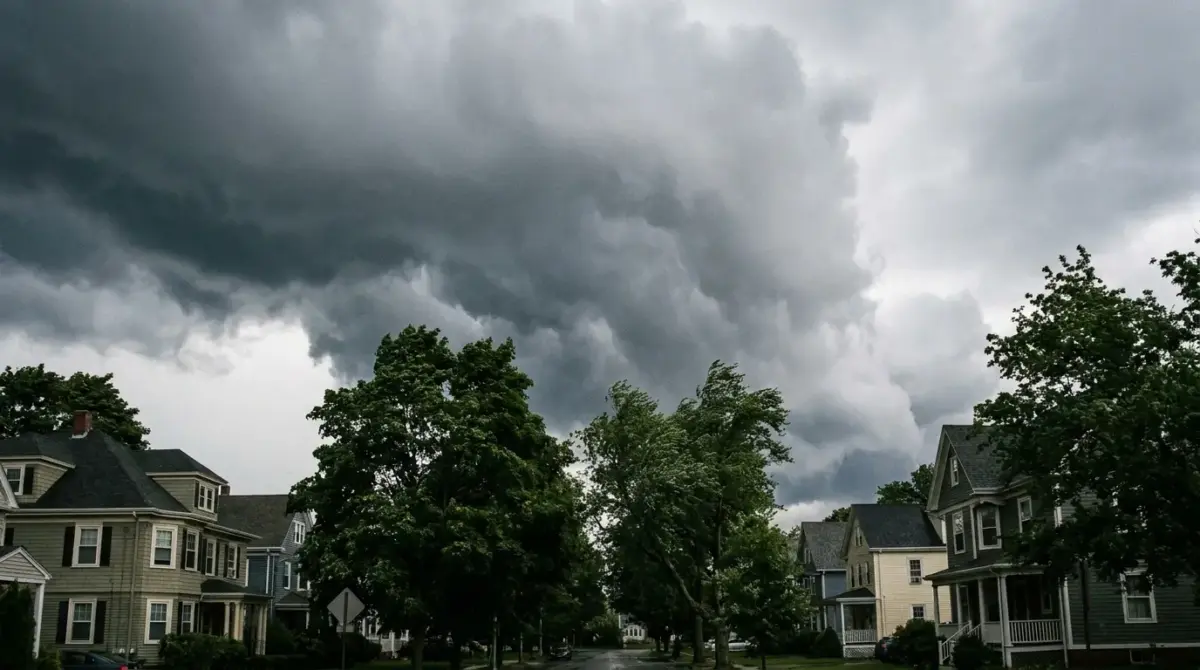
Nor’easters do very little to sound trees. They find the weak union, the dead limb nobody noticed, the root plate already lifting. Most of the damage a storm causes was decided months before the wind arrived. This checklist covers what to walk around and look at on your own property while the weather is still calm.
Every Massachusetts homeowner has a story about a tree that came down during a nor’easter. The fence one took out. The car in the driveway. The shingles ripped off the roof. The tree that fell across the road and trapped you inside for two days while the town cleared it.
Some of those failures were unavoidable acts of nature. Most weren’t. The tree had warning signs the owner missed, or pruning that never happened, or hazards that could have been fixed in September that wreaked havoc in October.
Here’s the pre-storm checklist for your trees, ranked by what matters most.
1. Walk Every Tree and Look for the Big Hazards
Spend an hour with this checklist for every mature tree near your house, driveway, power lines, or main yard areas:
- Dead branches anywhere in the canopy, especially the top
- Visible lean that wasn’t there a year ago
- Cracks running vertically up the trunk
- Fungal conks (shelf mushrooms) at the base
- Hollow sound when knocking on the trunk
- Cracked or compressed soil around the base showing root movement
- Branches making contact with the house, gutters, or power lines
Any two of these signs on the same tree means call a certified arborist before storm season. Don’t take chances on this — the cost of catching a hazard is much smaller than the cost of cleanup after it fails.
2. Get Deadwood Out Before Wind Does
Dead branches are the most common storm hazard and one of the cheapest to fix. They snap easily, fall unpredictably, and damage everything below them. Removing dead branches in September means they’re not falling in October.
For dead branches you can reach safely from the ground, this is DIY-friendly. Anything overhead, anything above 10 feet, anything bigger than 2 inches diameter — that’s professional work.
3. Reduce the Wind Sail on Overextended Branches
Branches that have grown out way past the rest of the canopy catch more wind. A long lateral branch over your roof or driveway is the most common single-point failure in a storm.
“Reduction pruning” — shortening overextended branches at a proper lateral — reduces wind sail without destroying the tree’s structure. This is what arborists mean when they talk about pre-storm crown reduction. It’s not topping. It’s not gutting the tree. It’s targeted weight reduction on specific problem branches.
4. Check Cables and Braces on Older Trees
If you have older trees with previously installed cable systems (sometimes from previous owners), inspect them. Cables get fatigued by years of wind movement. Hardware can fail. A cable that snaps mid-storm shifts load to remaining cables unpredictably.
Schedule a system inspection every 3-5 years. Pre-storm season is the right time.
5. Clear the Drainage Around Trees
Saturated soil is the #1 cause of tree uprooting in nor’easters. Trees standing in waterlogged ground for several days during a storm lose root anchorage and topple over.
Check that:
- Gutters and downspouts aren’t dumping water at the base of trees
- Drainage swales aren’t directing runoff into tree root zones
- Mulch isn’t piled against trunks (traps moisture against bark)
- Low spots near trees are graded to drain away from the trunk
6. Document Tree Condition With Photos
Walk your property with a phone camera. Take wide shots of every mature tree, close-ups of any concerning spots, photos showing the relationship between trees and structures.
Why: if a tree comes down in a storm and damages your house or a neighbor’s property, your insurance claim is dramatically stronger with documented “this was a healthy tree before the storm” evidence. The Insurance Information Institute’s coverage breakdown notes that documentation of tree condition affects claim outcomes.
7. Identify and Save Emergency Contacts
Before the storm hits, have these numbers saved:
- Your utility company emergency line (downed power lines)
- Your insurance company’s claims line
- A reputable local 24/7 tree service you’ve vetted in advance
- Your homeowner policy number
The middle of a storm at 2 AM is not the time to be Googling tree services. Storm chasers from out of state descend on Massachusetts after every major event and prey on people in panic. Knowing who to call in advance protects you.
When the Storm Is Forecast
24-48 hours before:
- Move vehicles out from under trees if possible
- Bring in outdoor furniture and grills that could become missiles
- Check the National Weather Service Boston forecast for specific wind speed predictions
- Make sure phones are charged, flashlights ready
- If a major nor’easter is predicted, plan to be home and aware (downed limbs after the storm are a bigger injury risk than during)
Annual Pre-Storm Checkup Pays Off
They identify hazards you wouldn’t notice, recommend specific interventions, and document everything.
If you’ve had any close calls with falling branches in past storms, or if your property has many mature trees, this is one of the highest-ROI investments in home maintenance. The cost of cleaning up after one preventable tree failure is typically 10-20x the cost of the inspection.
Bottom Line
Most storm tree damage is preventable. The hazards are usually visible months before they fail — they just need someone trained to spot them. Spend a Saturday in September walking your trees, schedule professional intervention for anything concerning, and you’ll dramatically reduce the odds of being part of someone else’s storm story.
Trusted Local Network
Nor’easter prep for trees is one part of broader storm-readiness across multiple trades. For related needs, we recommend HVAC services for storm and power-outage preparedness.
Your Massachusetts Storm Prep Specialists
Want a pre-storm safety inspection before nor’easter season? Norfolk Tree Service serves Norfolk County, Middlesex County, and Bristol County — including Waltham, Lexington, Watertown, Milton, and 40+ surrounding towns. Our ISA-certified arborists assess hazards and handle tree trimming and reduction pruning to storm-proof your property. Contact us today.