 Skip to content
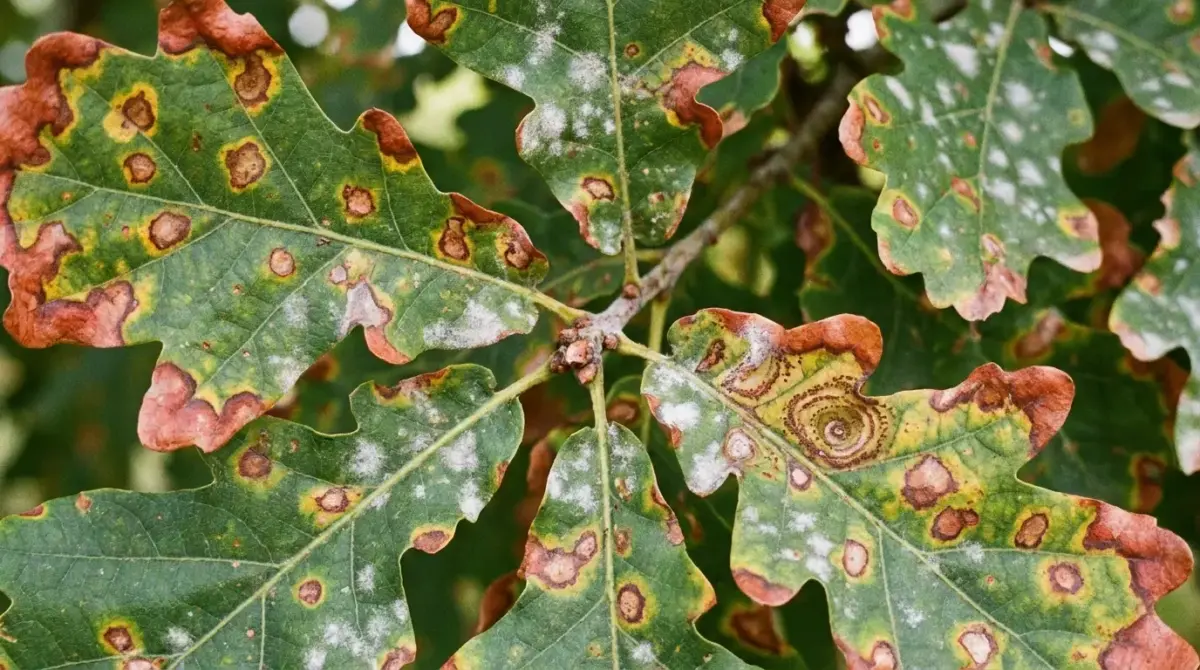
A diseased tree rarely announces itself. It thins at the top, drops leaves early, or grows a patch of bark that looks wrong, and by the time the crown is obviously failing the options have narrowed. This guide covers the diseases that turn up most often on Massachusetts properties, what the first symptoms look like, and when they are worth an arborist’s eyes.
Trees in Massachusetts deal with a long list of diseases that can wreck a mature specimen in a few seasons. Most are visible early if you know what to look for. Most respond to treatment if caught early enough. Here are the diseases every MA homeowner should be able to identify.
1. Oak Wilt
Fast-killing fungal disease that targets oaks, especially red and black oaks. Leaves wilt and brown starting at the top of the canopy, often dying within weeks. Spread by sap-feeding beetles attracted to fresh pruning wounds. Never prune oaks April through October. The US Forest Service oak wilt guidance covers identification.
2. Dutch Elm Disease
Has decimated American elms across Massachusetts. Symptoms: leaves wilt and yellow on individual branches in summer, “flagging” through the canopy. Spread by elm bark beetles. Treatment with fungicide injections can protect uninfected trees but rarely saves infected ones.
3. Anthracnose
Fungal disease that hits sycamore, dogwood, maple, and ash during cool wet springs. Brown spots on leaves, leaf drop, twig dieback. Usually not fatal but disfiguring. Cool dry weather slows it down naturally.
4. Verticillium Wilt
Soil-borne fungus affecting maples, ash, smoke tree, and many others. Leaves wilt and yellow on individual branches; branches die back. Cutting affected branch reveals dark streaking in the wood. No cure – manage by removing affected branches and supporting tree health.
5. Apple Scab
Hits apple, crabapple, and pear. Olive-green to brown spots on leaves and fruit. Severe infections cause early leaf drop. Resistant cultivars exist if you’re planting new. Fungicide treatments help during wet springs.
6. Cedar-Apple Rust
Requires both cedar trees AND apple/crabapple trees within about a mile to complete its life cycle. Orange galls on cedars in spring, rust-colored spots on apple leaves. Remove either host to break the cycle.
7. Beech Bark Disease
Has killed enormous numbers of American beeches across New England. Caused by scale insect followed by fungal infection. Bark develops cankers and blisters. The Massachusetts Forest Health Program tracks the spread.
When to Call for Diagnosis
If your tree shows any of: unusual leaf spotting, wilting on individual branches while rest of tree looks fine, bark cankers, sudden canopy thinning, or visible fungal growth – get a certified arborist diagnosis before assuming you know what it is. Wrong treatment wastes money and can hurt the tree.
Bottom Line
Tree diseases in Massachusetts are diagnosable, often treatable when caught early, and ignorable only at the cost of losing the tree. Walk your trees regularly. Photograph anything unusual. Get expert eyes on suspicious symptoms before they spread.
Trusted Local Network
Tree disease in mature trees often signals broader property health issues. For related needs, we recommend public insurance claim representation.
Your Massachusetts Tree Care Specialists
Suspect tree disease on your property? Norfolk Tree Service serves Norfolk County, Middlesex County, and Bristol County including Waltham, Lexington, Watertown, Milton, and 40+ surrounding towns. Our ISA-certified arborists diagnose and treat tree disease or handle tree removal if the tree is past saving. Contact us today.