 Skip to content
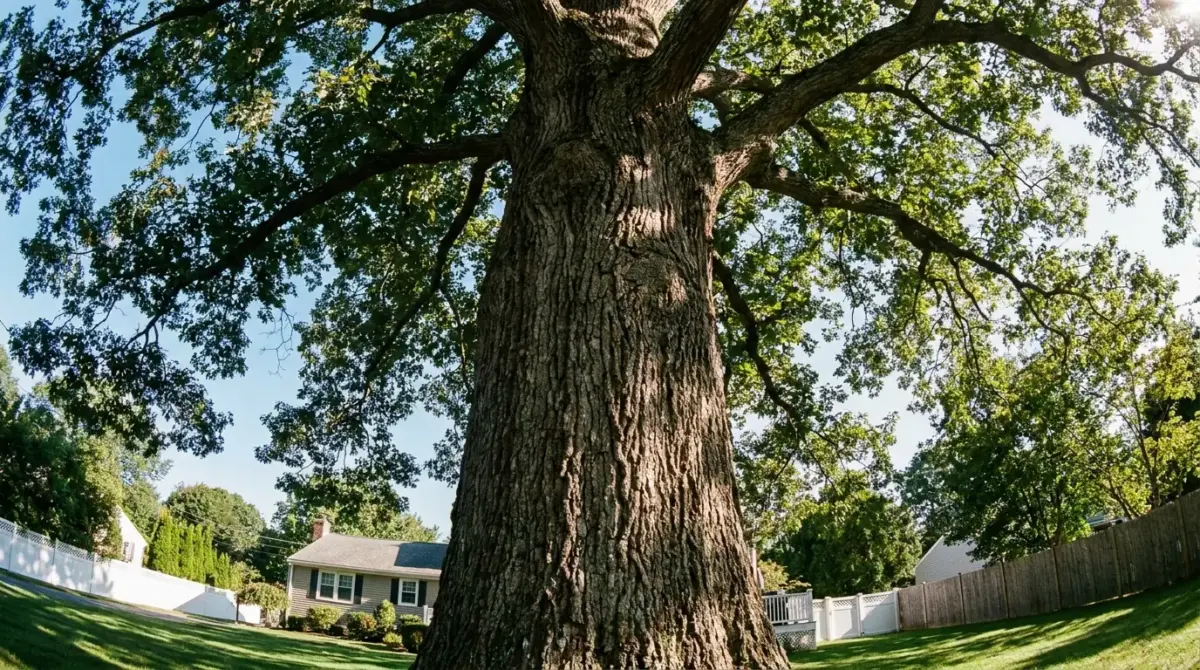
How tall a tree grows here depends on its species, the soil it landed in, and how hard it had to compete for light. Height also changes how the tree has to be worked on and who needs to be on the job. This guide covers the sizes common New England species reach and what that means when it is time to prune or remove one.
The mature oak shading your front yard might be 60 feet tall. The white pine at the back of the lot looks taller. The question most homeowners eventually ask: how big can these things actually get? And why do some trees stay short while others tower over the neighborhood?
Maximum Heights by Common Massachusetts Species
Realistic mature heights for trees commonly growing in Massachusetts yards and forests:
- Eastern white pine: 80-100 feet typical, can hit 150+ in old growth
- Tulip poplar: 70-90 feet
- Red oak: 60-90 feet
- Sugar maple: 60-80 feet
- American beech: 60-80 feet
- Red maple: 50-70 feet
- White ash: 60-80 feet (where still surviving EAB)
- Norway spruce: 60-80 feet
- Hemlock: 60-80 feet
- Black walnut: 60-80 feet
- American hornbeam: 25-35 feet
- Eastern redbud: 20-30 feet
- Serviceberry: 15-25 feet
- Flowering dogwood: 15-25 feet
Species size matters when picking a tree for your yard. A red maple at full height in a small front yard becomes a problem. A serviceberry in the same spot stays right-sized for the property forever.
What Actually Limits Tree Height
Trees don’t keep growing taller forever. Several factors set practical limits:
Water Transport Physics
Trees move water from roots to leaves through capillary action and transpiration pull. The taller the tree, the harder it is to lift water against gravity. At a certain height, the physics break down — leaves at the very top can’t get enough water to thrive. This is why most species top out somewhere between 80 and 130 feet.
Soil Depth and Quality
Massachusetts soils vary enormously. Glacial till on hillsides? Shallow, rocky, limited root depth — trees struggle to reach full potential. River valley loam? Deep, rich, well-drained — trees can hit maximum heights. The same species can be 60 feet on one lot and 90 feet a mile away.
Wind Exposure
Trees in exposed locations (hilltops, coastal areas) stay shorter and wider. Trees in sheltered valleys grow taller. The constant wind pressure on a hilltop tree limits how much vertical growth it can support without snapping.
Competition
Trees in a dense forest grow taller and skinnier — they have to compete for sunlight. The same species growing as a solo specimen in an open yard grows shorter and wider. A 70-foot oak in your yard might be 90 feet in a forest of competing oaks.
Age
Most trees do their main vertical growth during their first 40-60 years. After that, growth slows dramatically and the tree puts most of its energy into thickening the trunk and main branches rather than getting taller.
The Tallest Trees in Massachusetts
Massachusetts has a few documented “champion” trees tracked by the American Forests National Big Tree Program and the Massachusetts Champion Tree Program. The state champion white pines reach over 140 feet. The largest sugar maples and tulip poplars approach 130 feet. These are extreme outliers — most specimens of the same species are much shorter.
Why Height Matters for Property Decisions
Knowing the mature height of your trees and the trees you’re planning to plant affects:
- Setback from structures — a tree should have at least its mature height of clearance from your house if you want to avoid future risk
- Power line conflicts — never plant tall species under or near energized lines
- Solar access — a 70-foot tree shades a much larger area than a 30-foot tree
- Removal cost — taller trees cost dramatically more to remove. Plant smart, save money later
- Wind exposure — taller trees catch more wind, increase storm risk
How to Estimate the Height of an Existing Tree
The simplest method anyone can use: the “stick trick.”
- Hold a stick vertically at arm’s length
- Walk away from the tree until the stick (held vertically) appears the same height as the tree
- The distance you walked equals the tree’s height
Smartphone apps using camera-based clinometers can do this more precisely. For trees you’re considering removing or where height matters legally (setbacks, view easements), a certified arborist can measure exactly using clinometer plus laser rangefinder.
Can You Keep a Tree Short?
Trying to keep a naturally tall tree artificially short is a losing battle that wrecks tree health. “Topping” — cutting back the leader to limit height — causes weak regrowth, structural defects, and shorter lifespan.
The right approach: pick species that naturally grow to the size you want. For a yard near power lines or a small property, choose understory species that top out at 25-30 feet. For a big back yard with room for canopy, let the oak or maple reach its full potential.
Bottom Line
The trees in your yard probably won’t reach the tallest documented heights for their species — soil, wind, and competition typically limit growth before physics does. But every species has a mature size you can predict reasonably well, and planting the right size tree in the right spot is the difference between a 50-year asset and a 20-year regret.
Trusted Local Network
Tree height regulations and standards vary by region, just like building codes. For related needs, we recommend general home-services contractors.
Your Massachusetts Tree Planting Specialists
Need help picking the right size tree for your yard? Norfolk Tree Service serves Norfolk County, Middlesex County, and Bristol County — including Waltham, Lexington, Watertown, Milton, and 40+ surrounding towns. Our ISA-certified arborists handle tree and shrub planting with species and placement that fits your property long-term. Contact us today.