 Skip to content
Tree wrapping is one of the most common tree-care questions Massachusetts homeowners ask. This guide walks you through what every property owner should know about tree wrapping — what to watch for, when to act, and how a Massachusetts arborist approaches tree wrapping on real properties across Norfolk, Middlesex, and Bristol counties.
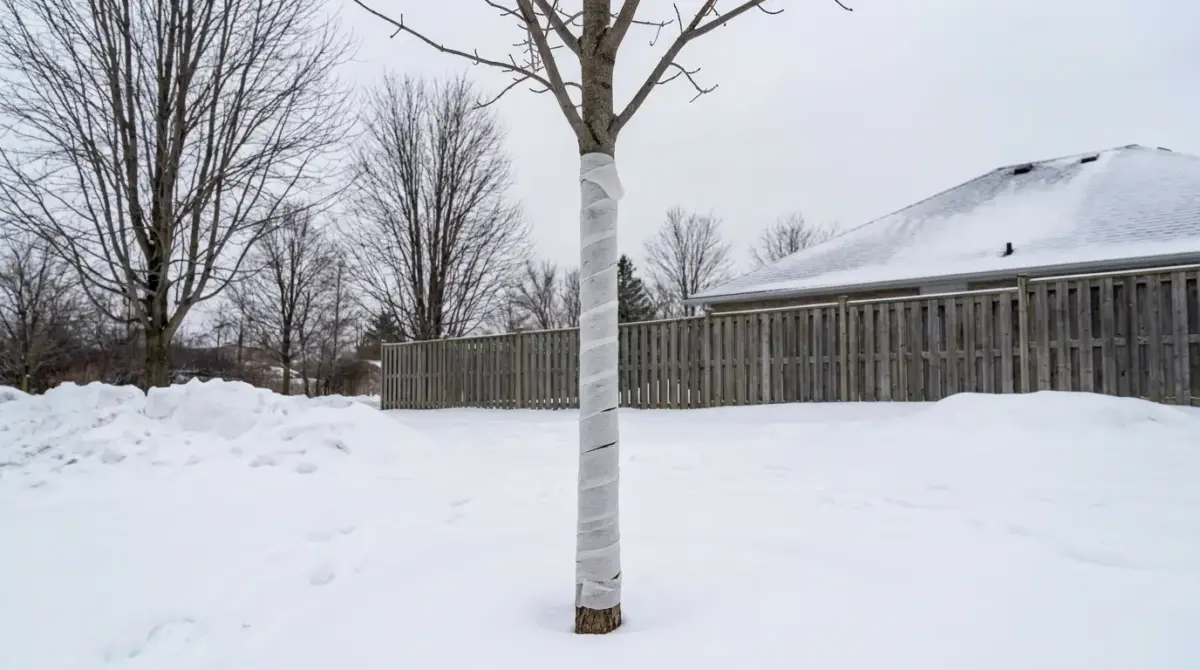
Walk through a New England suburb in November and you’ll see them – tree trunks wrapped in white plastic, burlap, or those weird Slinky-like plastic spirals. Is this real winter protection or just landscaping theater?
The answer: it depends on the tree, the location, and what you’re protecting against. Here’s when wrapping actually helps and when it’s just busywork.
What Tree Wrapping Actually Protects Against
1. Sunscald
Winter sun heats up the south and southwest sides of thin-barked tree trunks during the day. The bark thaws and becomes active. Then sun sets, temperature plunges 50+ degrees, and the bark cells rupture. Result: split bark, cankers, and long-term damage on young thin-barked species.
Most vulnerable: young maples, fruit trees, dogwoods, kousa, and other smooth-bark species under about 10 years old.
2. Rodent Damage
Voles and mice eat bark off young trees during winter. Hardware cloth wraps or rigid tree guards prevent access.
3. Deer Damage
Bucks rub antlers on young tree trunks in fall, stripping bark in long vertical scrapes. Wrapping with paper, plastic, or commercial guards prevents most damage.
What Wrapping Doesn’t Help With
Wrapping does nothing for established trees with thick mature bark. It doesn’t help with winter dieback from cold, doesn’t prevent frost cracks on large trees, and doesn’t insulate the tree.
Wrapping mature thick-barked trees (oaks, maples over 10 inches diameter, pines) is unnecessary. The bark is already protecting itself.
The Wrong Way to Wrap
Bad wrapping causes more harm than no wrapping. Avoid:
- Plastic that traps moisture against the bark – causes rot and fungal growth
- Wraps left on year-round – bark needs sun and air exchange in growing season
- Wraps that constrict as the tree grows – can girdle the trunk
- Wraps applied before bark hardens in late fall – can interfere with dormancy
- Wraps tight against the bark – need air gap for proper protection
The Right Way
For sunscald protection: paper tree wrap (white reflects sun) or rigid spiral guards. Apply in November after first hard frost. Remove in early April when temperatures stabilize.
For rodent protection: hardware cloth (1/4″ mesh) wrapped around the trunk, buried 2 inches into the soil, extending 18+ inches above expected snow line. Leave in place year-round if you’ve had vole damage, removing annually only to check for trunk constriction.
For deer protection: rigid plastic tree tubes or wire-mesh fencing extending 5+ feet above ground. Most needed for trees in deer-active areas like rural Massachusetts properties with woods nearby.
When Wrapping Becomes Permanent Damage
Tree wraps forgotten on trunks for years cause:
- Girdling as the tree grows and the wrap stays the same size
- Insect harborage between wrap and bark
- Bark rot from trapped moisture
- Stunted growth on the wrapped section
Annual inspection is essential. If you wrapped trees and forgot – go look right now.
The Arbor Day Foundation winter protection guidance has more detail on appropriate wrapping for specific species.
Bottom Line
Tree wrapping is right for young thin-barked species, trees with sunscald risk, and trees in rodent or deer pressure zones. It’s unnecessary for mature thick-barked trees. Always remove wraps in spring. Always check annually for constriction. Done right, wraps prevent specific winter damage. Done wrong, they create year-round problems.
Trusted Local Network
Winter tree wrapping is one piece of broader cold-weather property prep. For related needs, we recommend plumbing services for cold-weather pipe protection.
Your Massachusetts Tree Care Specialists
Wondering whether your trees need winter protection? Norfolk Tree Service serves Norfolk County, Middlesex County, and Bristol County including Waltham, Lexington, Watertown, Milton, and 40+ surrounding towns. Our ISA-certified arborists assess your specific trees and recommend the right tree care for winter. Contact us today.