 Skip to content
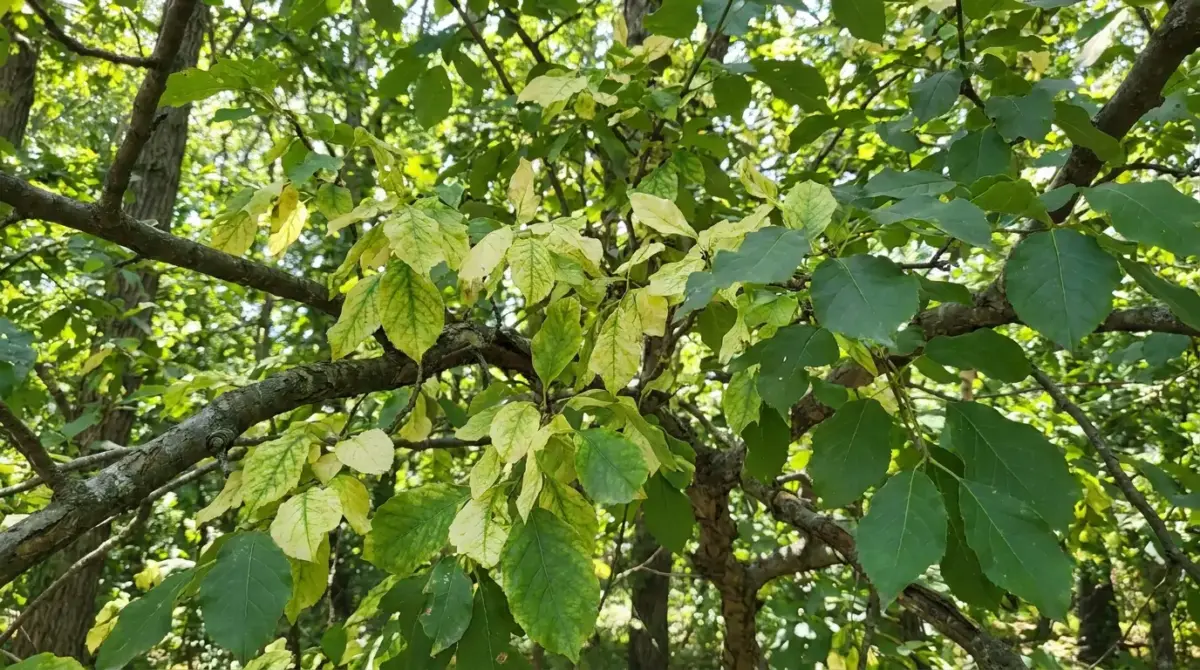
Leaves turning yellow in July are not autumn arriving early. They are a tree telling you that something at the roots, in the soil, or in the water reaching it has gone wrong. This guide works through the causes that show up on New England properties in midsummer, and how to tell an easy fix from a problem that needs a professional look.
Yellow leaves in October are normal — that’s autumn doing what autumn does. Yellow leaves in July are the tree telling you something is wrong, weeks or months before more serious symptoms appear. Catching the cause early sometimes saves the tree. Missing it usually doesn’t.
What Yellow Leaves in Summer Actually Mean
Leaves get their green color from chlorophyll. When a tree is healthy, chlorophyll production keeps pace with demand. When the tree is stressed, chlorophyll breaks down faster than it can be replaced — the green fades, the yellow underlying pigments show through.
The technical term is “chlorosis.” It’s a symptom, not a disease. The underlying causes vary, and so do the fixes.
The 6 Most Common Causes in Massachusetts
1. Iron Deficiency (Iron Chlorosis)
The classic. Leaves turn yellow but the veins stay distinctly green — a pattern called “interveinal chlorosis.” Common in pin oaks, white oaks, red maples, and rhododendrons in Massachusetts.
The cause isn’t usually that the soil lacks iron — most Massachusetts soils have plenty. The problem is soil pH. When soil pH climbs above 7, iron becomes chemically unavailable to roots even though it’s present in the soil. This is common on Massachusetts properties with limestone gravel driveways, concrete near the tree, or soil amended with lime.
Fix: soil pH testing through your local UMass Soil Testing Laboratory, then targeted soil treatment to lower pH. Direct iron chelate applications can provide a quick fix while soil chemistry is corrected.
2. Drought Stress
Massachusetts has been hit by multi-week drought spells in many recent summers. Even drought-tolerant trees show yellowing when soil moisture stays too low for too long. Leaves yellow uniformly, then brown and drop early.
Newly planted trees (first 3 years) and trees in shallow soil are most vulnerable. Mature established trees usually survive but show stress through reduced canopy.
Fix: deep watering during drought — 1-2 inches of water once a week, applied slowly at the drip line, not surface sprinkling.
3. Soil Compaction From Foot or Vehicle Traffic
Heavily compacted soil prevents oxygen exchange with roots. Roots suffocate and die back. The canopy loses access to water and nutrients. Yellowing spreads from the canopy edges inward.
Common around trees in parking strips, near playground equipment, or where landscapers regularly drive mowers and trailers over the root zone.
Fix: stop the traffic, mulch the root zone properly, professional soil aeration (vertical mulching or air spading) for severe cases.
4. Root Damage From Construction or Trenching
If your tree turned yellow the summer after construction work near it (new patio, irrigation lines, utility installation, foundation work), that’s the cause. Cut roots reduce the tree’s water uptake capacity. The canopy thins.
Fix: heavy watering for several years to support reduced root capacity, reduction pruning to balance crown to root mass, sometimes nothing — by the time symptoms show, the damage is done.
5. Girdling Roots
Roots that have grown in a circle around the trunk (usually from being planted in a too-small hole or from container-grown stock not corrected at planting) eventually choke off the tree’s vascular system. Symptoms include canopy yellowing, branch dieback, and sometimes visible girdling roots emerging from the soil at the trunk base.
Fix: professional root pruning by a certified arborist using air-spading to expose and cut the offending root without damaging the rest of the root system.
6. Pest or Disease Pressure
Several Massachusetts tree pests cause summer yellowing. Hemlock woolly adelgid on hemlocks. Spongy moth (formerly gypsy moth) defoliation triggering refoliation that comes in pale and yellow. Verticillium wilt on maples. Anthracnose during cool wet springs.
Fix: depends on the pest. Certified arborist diagnosis is the first step — wrong treatment for wrong pest wastes money and can hurt the tree.
How to Tell What’s Causing It
A few diagnostic questions:
- Is the yellowing uniform across the tree or patchy? Uniform usually means drought or soil. Patchy often means disease or insect
- Are leaves yellow with green veins (iron chlorosis) or uniformly pale
- Is the tree near recent construction, paving, or landscaping changes?
- Has the area had drought conditions in the past 2 months?
- Are other trees of the same species nearby also showing symptoms?
Answers narrow the cause. A certified arborist can usually identify the issue from a 15-minute property visit.
Bottom Line
Yellow leaves in July are a warning sign. The tree is using its energy reserves to compensate for something — soil chemistry, drought, root damage, or pest pressure. Catching the cause early often allows the tree to recover. Waiting until the canopy is half thinned out usually means removal is the realistic option. Don’t ignore summer yellowing.
Trusted Local Network
Yellow leaves on summer trees often signal water stress, which can also surface broader irrigation and plumbing concerns. For related needs, we recommend plumbing services for irrigation and outdoor water systems.
Your Massachusetts Tree Care Specialists
If your trees are showing summer yellowing, Norfolk Tree Service serves Norfolk County, Middlesex County, and Bristol County — including Waltham, Lexington, Watertown, Milton, and 40+ surrounding towns. Our ISA-certified arborists can diagnose the cause and recommend the right intervention or tree removal if the tree is beyond saving. Contact us today.