 Skip to content
Tree Removal Permits in Massachusetts
Do You Need a Permit to Remove a Tree in Massachusetts?
Most tree work here needs no paperwork at all. What decides the rest is where the trunk is standing – not how big the tree is, and not why you want it gone.
Call (781) 386-0512Request a Free Quote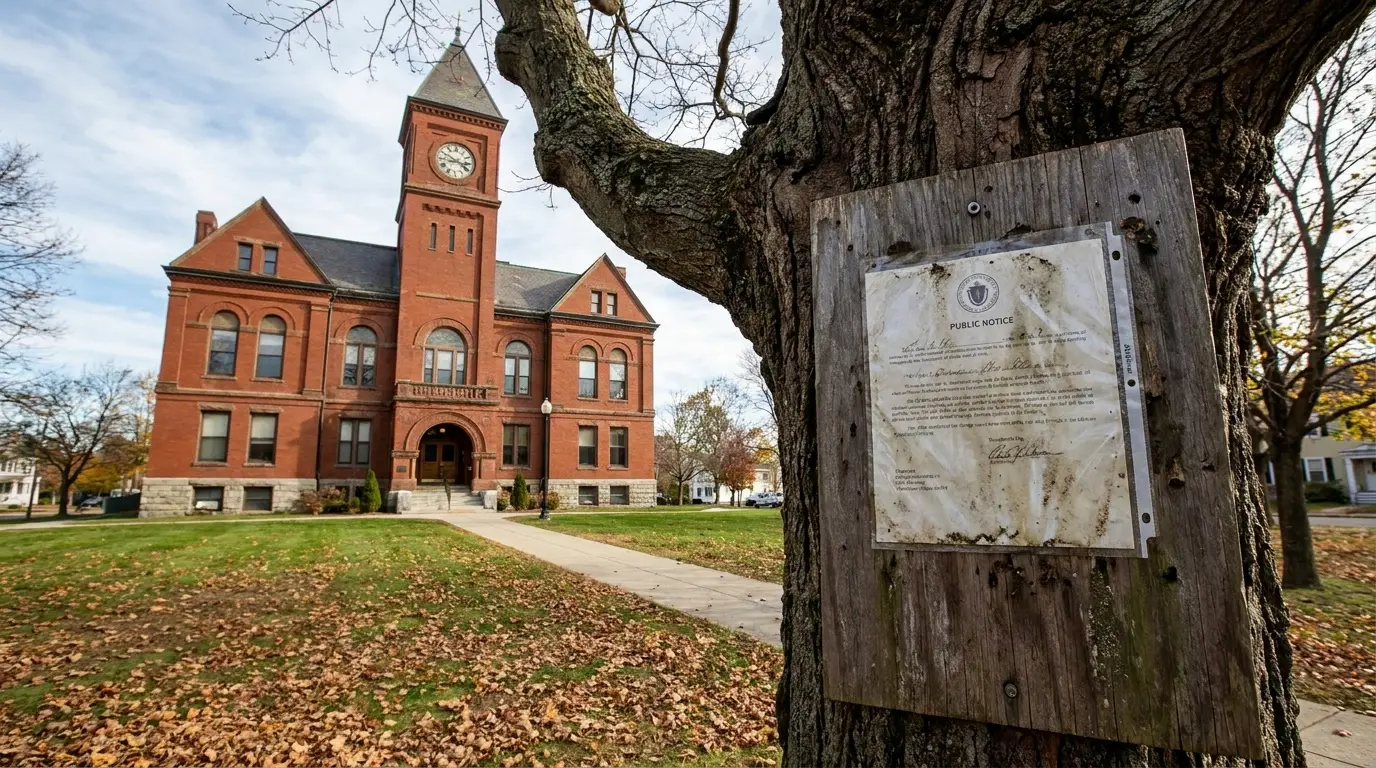
The honest answer is that most tree work in Massachusetts needs no paperwork at all, and a small share of it needs a decision that is not yours to make. What separates the two is not the size of the tree or the reason you want it gone. It is where the trunk is standing. Get that one question right and the rest of the process is short.
This page is the plain version of that question for homeowners across Middlesex, Norfolk and Bristol counties. It does not quote fees or filing windows, because those are set town by town and they change. It tells you who to ask, and what we need to see before a crew books the work.
Start with one question: where is the trunk standing?
Walk to the tree and look down, not up. Five situations cover almost every removal we are asked about, and each one has a different decision-maker behind it.
- Fully inside your own property lines – the common case, and normally your call alone.
- Inside the road layout – the strip along the street, which is often wider than people expect.
- On the boundary with a neighbor – a shared trunk, which is a shared decision.
- Inside a wetland or resource-area buffer – brooks, ponds, swamps, vernal pools and the land around them.
- Within reach of overhead wires – a utility question before it is a tree question.
Trees standing entirely on your own land
If the trunk is clearly inside your lines, clear of any wetland buffer and clear of the road layout, the removal is generally a private decision between you and the crew doing the work. There is no town form to chase and nobody to persuade.
Two things still matter. The first is the drop zone: a tree standing on your land can easily fall across a line you do not own, and rigging it down in sections instead of felling it whole is often the difference between a routine morning and a claim. The second is what the town considers its layout, which is the next section, because the answer surprises people more often than any other part of this.
Trees along the road, and the town tree warden
Every Massachusetts town and city has a tree warden. In practice the office usually sits inside the DPW, the highway department or the parks division, and the same person handles storm-damaged limbs over the road, street-tree planting and requests to remove a tree in the public way.
The part homeowners get wrong is the width of the layout. The strip of grass between the sidewalk and the curb is very often town land even though you are the one mowing it, and the layout can reach in past the sidewalk on older roads. A deed plan or a fence line is not proof of where it ends. If there is any doubt at all, one phone call to the tree warden settles it before anybody quotes a price.
Where the tree does turn out to be in the public way, the decision is the town’s rather than yours, and the process is a town process. We are happy to describe the tree’s condition, what we would do and why – but the request itself comes from the property owner, because that is who the town corresponds with.
Boundary trees and shared trunks
A tree whose trunk crosses the property line belongs to both properties, and neither owner can decide on their own to take it down. This is the situation that most often stops a booked removal on the morning of the job.
Our rule is simple and we do not bend it: if the trunk straddles the line, we want both owners agreeing in writing before a saw comes off the truck. Overhanging limbs are a narrower question than a whole trunk, but the same conversation is worth having first – a neighbor who hears about it beforehand is a different neighbor from one who hears the chipper.
Wetlands, resource areas and conservation land
Eastern Massachusetts is full of small brooks, wet corners, ponds and vernal pools, and the land around them carries protection that has nothing to do with the tree warden. A back corner that is dry all summer can still sit inside a buffer.
Your town’s conservation commission is the office that answers this, and it is a separate track from the public-way question – both can apply to the same tree. If the tree is anywhere near standing or running water, or the back of the lot backs onto open land, ask before the work is scheduled rather than after.
Trees in contact with utility wires
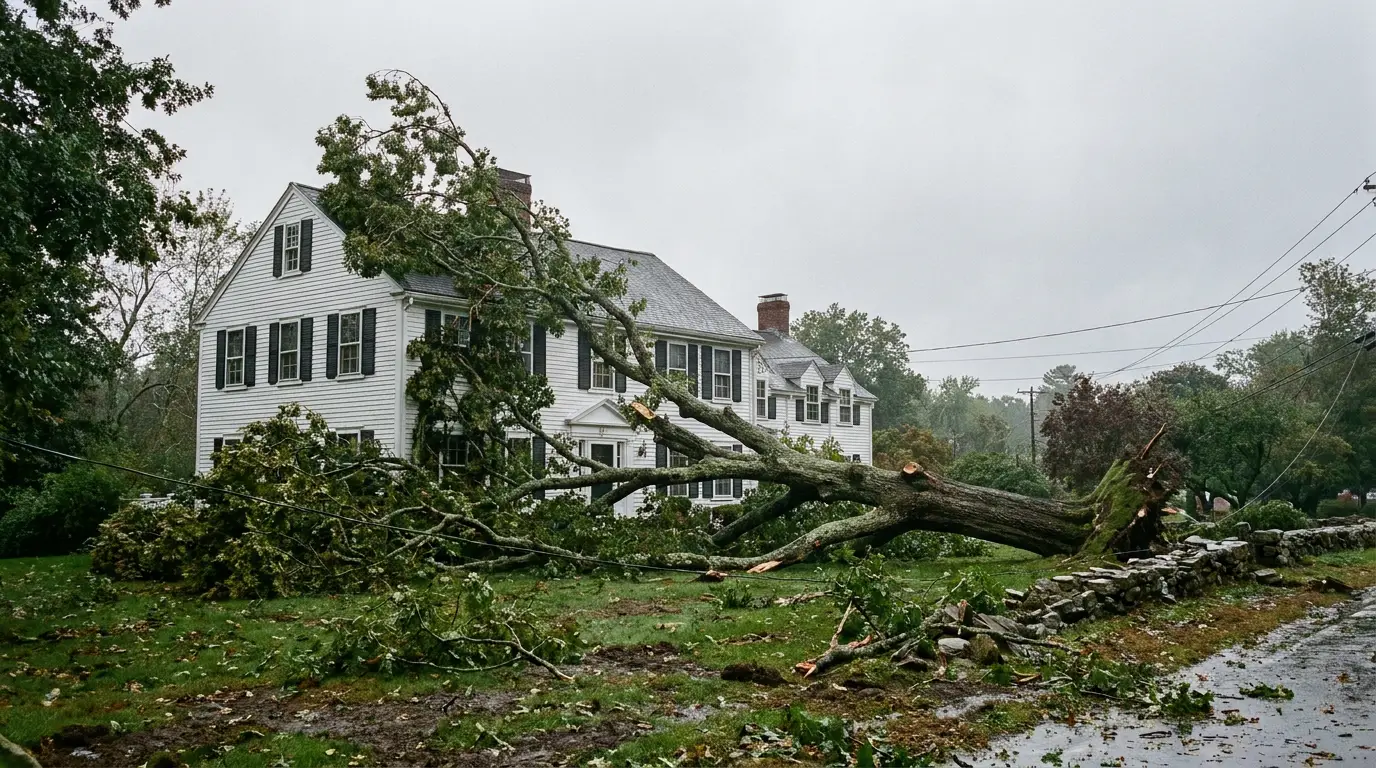
If any part of the tree is touching, resting on or growing through overhead wires, the first call is to the utility, not to a tree company. Line clearance near an energized conductor is specialist work with its own qualifications, and no homeowner should be arranging around it.
Once the utility has dealt with its side, the rest of the tree is ordinary tree work and we can take it from there. The same applies after a storm: wires down means the utility and the town first, every time.
| Where the trunk stands | Who normally decides | What we want before we start |
|---|---|---|
| Inside your own lines, no buffer, no wires | The property owner | A look at the drop zone and the access route |
| In the road layout or the strip by the curb | The town tree warden | Written confirmation from the town |
| Trunk crossing the property line | Both owners together | Both owners agreeing in writing |
| Near a brook, pond, swamp or vernal pool | The conservation commission | Confirmation that the commission has cleared it |
| Touching or through overhead wires | The utility company | The utility to clear the line first |
What we do before a removal is scheduled
Our estimator walks the tree, the drop zone and the access route, and says plainly which of the five situations above applies. If the answer is that somebody other than you has to agree first, you get told that at the estimate, not on the day. It is the least popular sentence in this trade and it is the one that keeps jobs out of trouble.
Where the tree is straightforwardly yours, we quote the removal, the rigging plan and what happens to the wood and the stump, and we book it. Where it is not, we tell you exactly who to call and what to ask them, and we hold the slot.
Where this applies
The same five questions apply in every town we cover across Middlesex, Norfolk and Bristol counties. Only the office you call changes.
- Tree Removal
- 24/7 Emergency Tree Services
- Tree Trimming
- Certified Arborist Consultation
- Service Areas
- Waltham, MA
- Newton, MA
- Brookline, MA
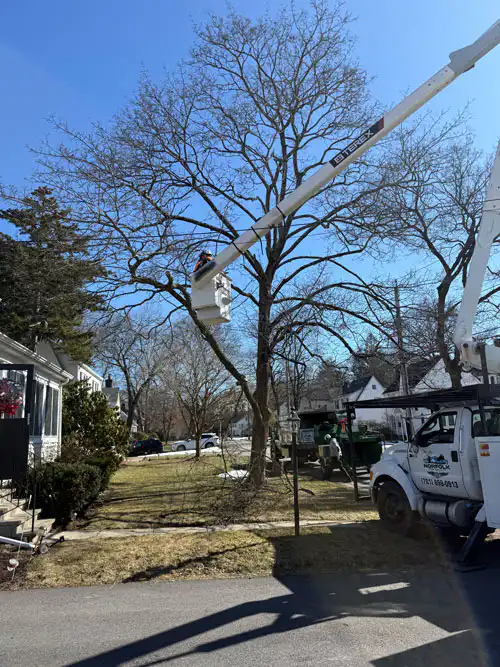 | A photo from Norfolk Tree Service job files. Every photo on this page comes from our own crews, not a stock library. |
Who Decides, at a Glance
Five situations cover almost every removal we are asked about. Find the one that matches your tree and you have your answer.
| Where the trunk stands | Who makes the call | |
|---|---|---|
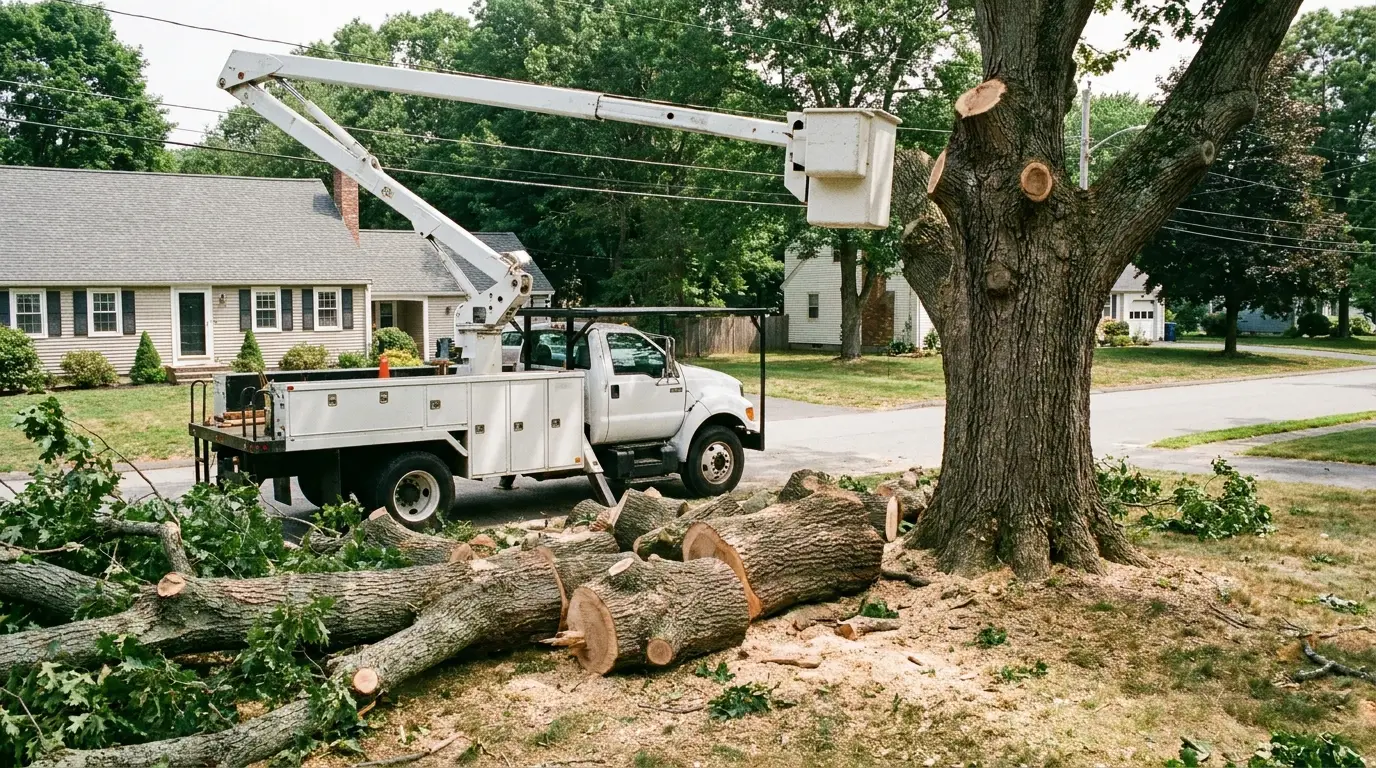 | Entirely on your own land | You do. No town sign-off is involved when the trunk sits well inside the line, clear of the road layout, wetlands and wires. |
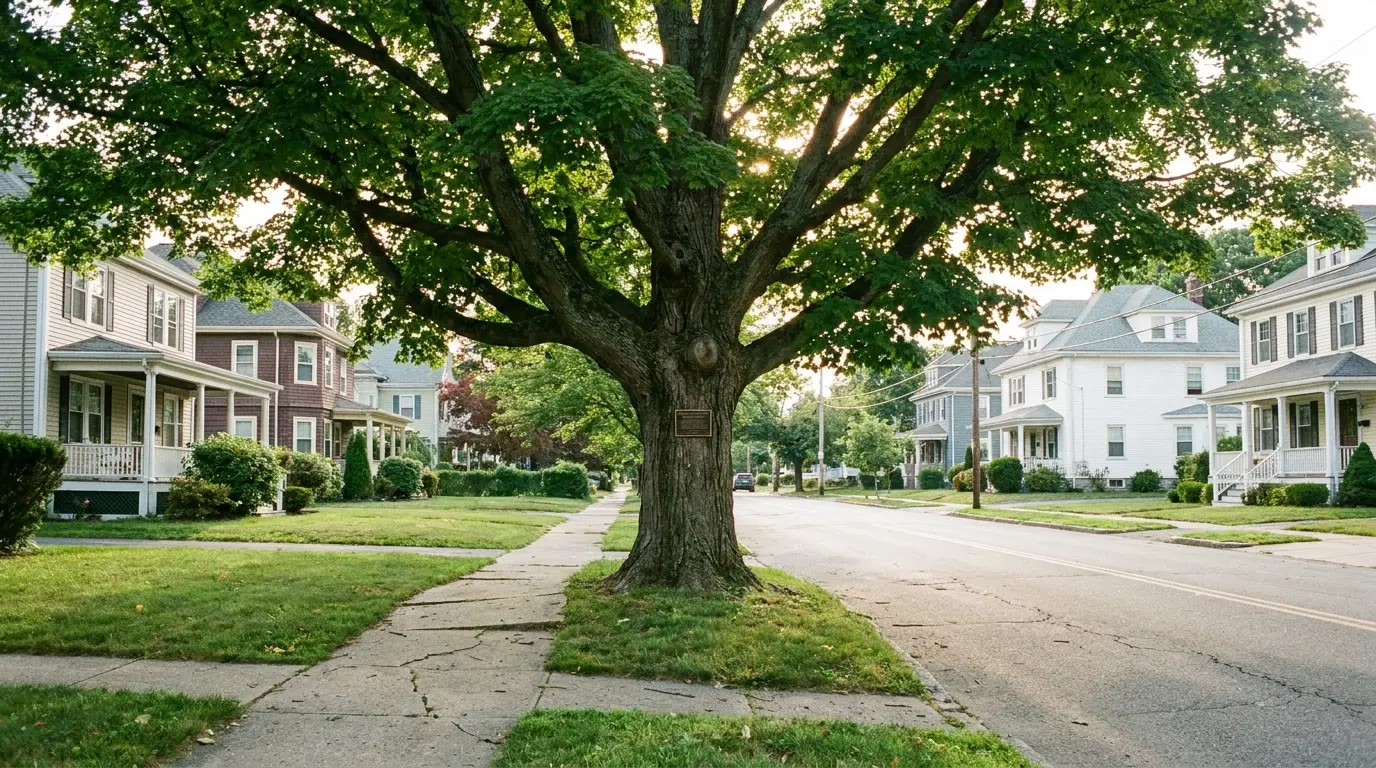 | In the road layout out front | The town tree warden. The layout often reaches past the pavement onto what looks like lawn, so pace it before you assume. |
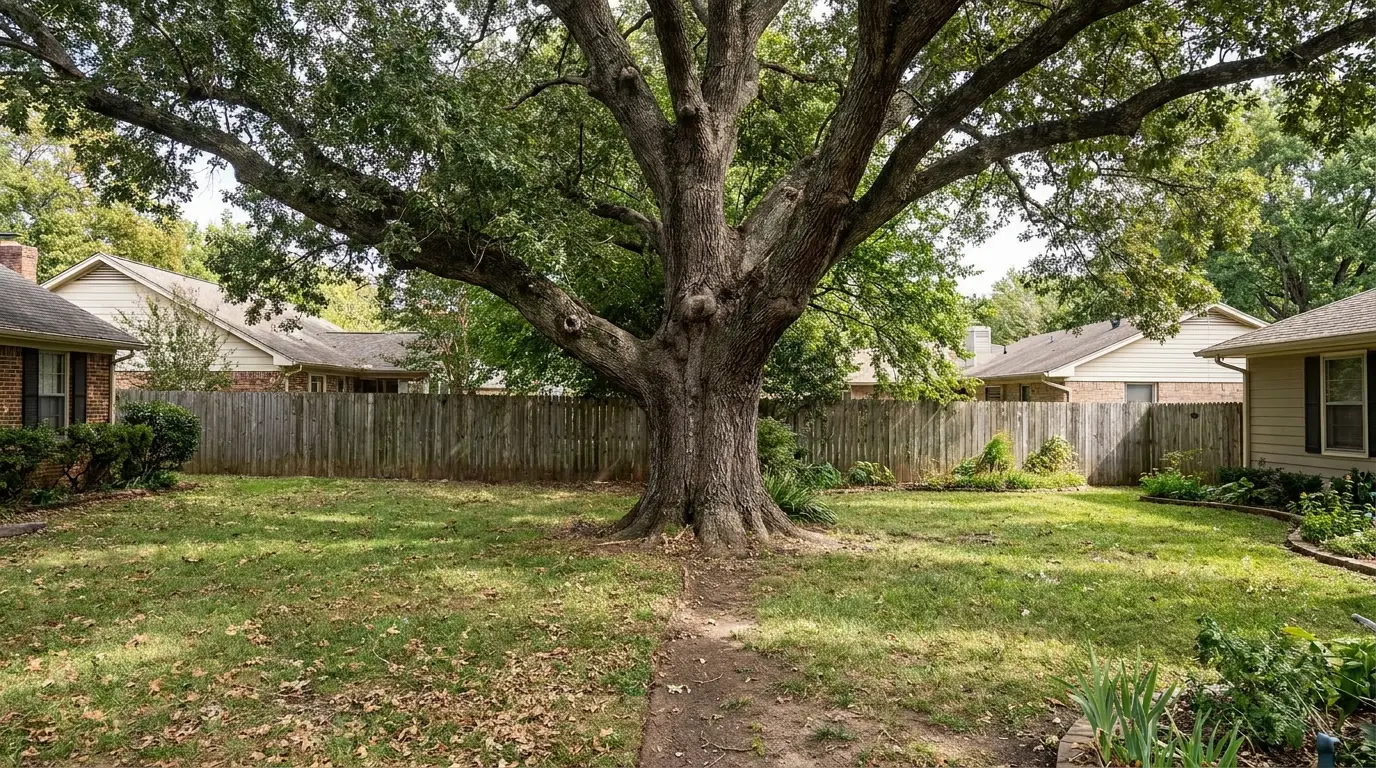 | Straddling a boundary | Both owners, together and in writing. We will not take a shared trunk on one signature. |
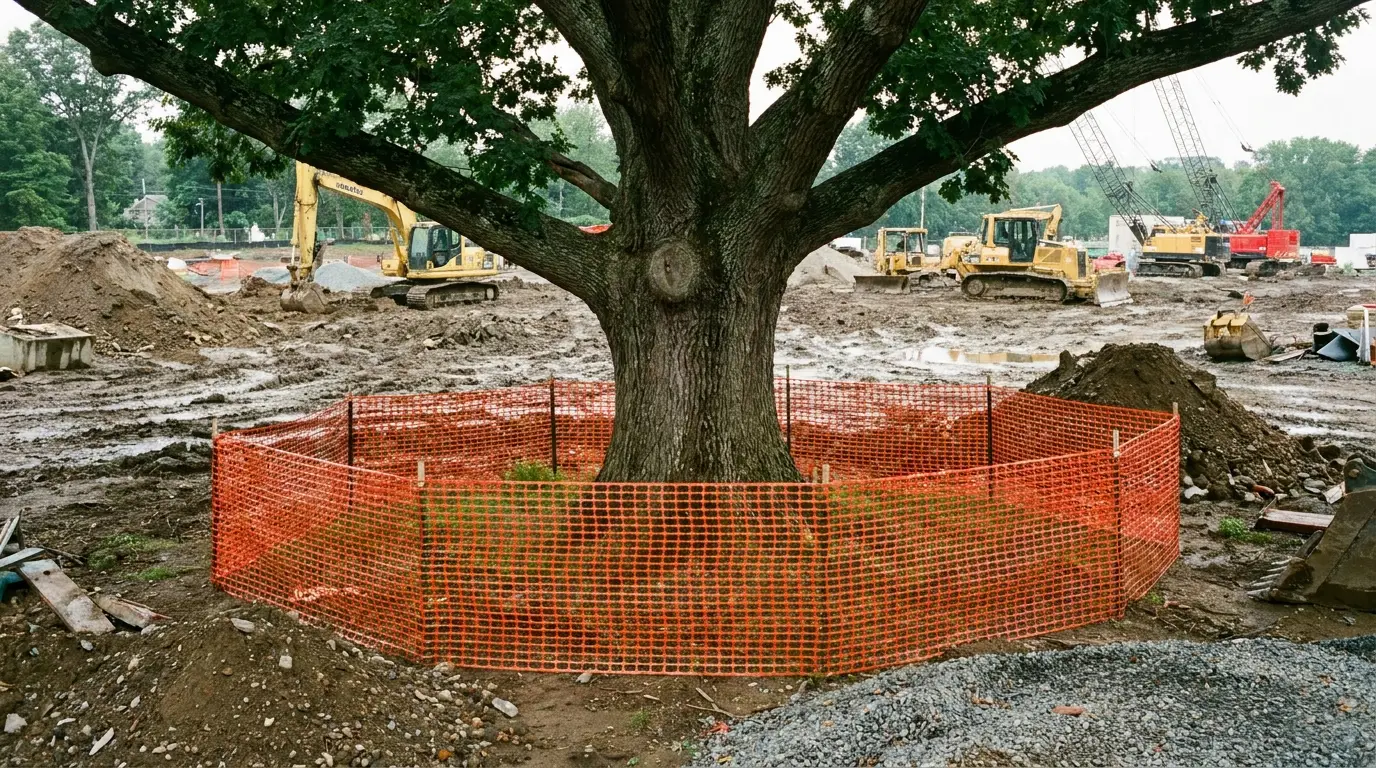 | In or near a wet area | The local conservation commission reviews work inside a resource area or its buffer before it is scheduled. |
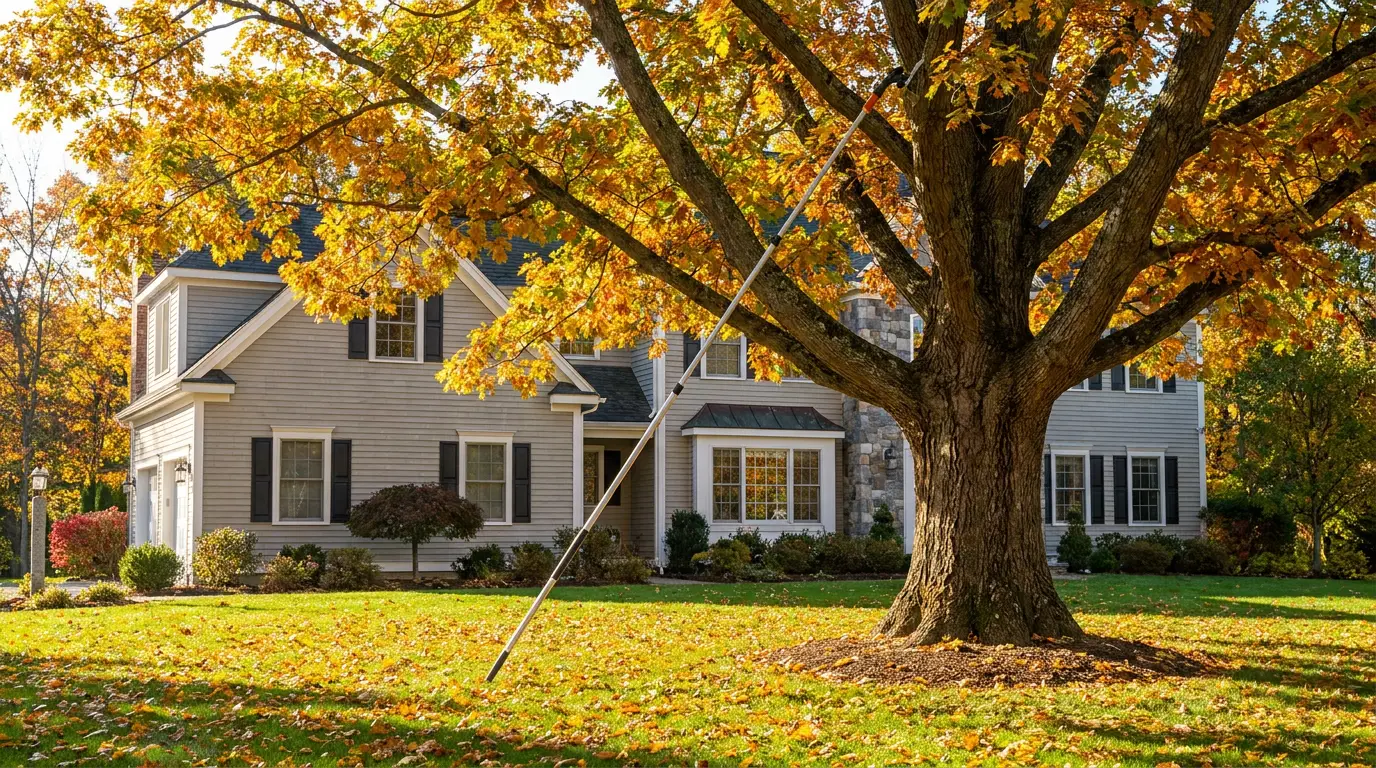 | Touching utility wires | The utility goes first. Lines are handled by their crew, and only then does ours climb. |
Frequently Asked Questions
Is it a coincidence that Norfolk Tree Service is also the name of the town?
Not a coincidence. The company is named after Norfolk County, where it has been based since 2014. The town of Norfolk is one of our home turfs.
Do you handle conservation review for work along the Stop River?
Yes. The Stop River corridor runs riverfront and wetland buffer overlays, vernal pool setbacks, and the standard Massachusetts Wetlands Protection Act zones. We file with Norfolk Conservation Commission and walk it through before any cuts happen inside 100 feet of the river.
What does it cost to take down a large white pine on a wooded back lot here?
Usually $900 to $2,400 depending on the rigging required, lot access, whether the wood gets bucked for firewood, and stump grinding. On a clean drop with open space the number sits low; inside a tight planted area it climbs.
Can you clear a wooded back corner for a new shed, garden, or pool?
Yes. Partial clears are common around here. We mark what stays, take what needs to come down, chip the brush, and leave the ground ready for the next contractor.
Do you cover MCI-Norfolk-adjacent properties or larger institutional lots?
Yes. The town carries several big institutional parcels and we have done work along multiple edge properties. Same insurance limits, same crew, same dispatch.
How is emergency response timed in this part of the county?
Inside an hour for true emergencies. Norfolk sits within reasonable driving distance of the Waltham home base, and a crew is on call every night of the year.
Do you handle the paperwork with the town?
We tell you what the job looks like from a tree-care point of view and what we would need in writing before we start. The application itself sits with the property owner, because the town deals with the owner of record.
Is a conservation commission filing the same as a permit?
No, and they can both apply to the same tree. A conservation filing is about the resource area the tree stands in. A tree warden decision is about the public way. Neither one answers for the other.
Tree Services We Offer
Get in Touch Today
No menus, no callback queue, no offshore call center. The Norfolk line goes to a real person who can talk specifics about the project and put eyes on it this week.
Estimates, scheduling, after-hours storm dispatch — (781) 386-0512, every day of the year.
Quotes happen on-site. We walk the property, take a real look at every tree on the list, and put the number in writing before any equipment moves.
Single specimen or a full lot reset, residential or commercial — give us a call.
Norfolk Tree Service · 40 Fairmont Ave, Waltham, MA 02453 · (781) 386-0512 · Open 24/7 · Always Live for Emergencies · Serving Norfolk, MA and the surrounding Norfolk County region
Tree Removal Across the Towns We Serve
The rule is the same statewide, but the office you call is not. These are the towns our crews work in most often – each page has the local detail.
Contact Norfolk Tree Service
Not Sure Who Decides on Your Tree? Ask Before You Book
Tell us where the trunk is standing and we will tell you whose sign-off the job needs – or that it needs none at all. We work across Norfolk, Middlesex and Bristol county towns.
Call (781) 386-0512Book OnlineOur Service Area